
Conversations on Leadership: Courtney Schultz with Emergent Leadership and Quaker Influences
This year I’m exploring a new interview series to tap into the wisdom and expertise of the visionary, creative leaders that Mighty Arrow partners with. We’ll talk about the important leadership traits, what we learned along our journey into leadership, and how to give confidence to each other as we work on hard things together, like building back the world we believe in.
Addressing the world’s biggest problems requires creative, intersectional thinking—and getting to those solutions requires specific leadership qualities and skills like adaptability and collaboration. Which is why I wanted to talk to Courtney Schultz for this interview.
Currently serving as director of the School of Sustainable Futures at Colorado State University (SSF), Schultz is also a professor of Forest and Natural Resource Policy in the Department of Forest & Rangeland Stewardship and directs the Public Lands Policy Group.
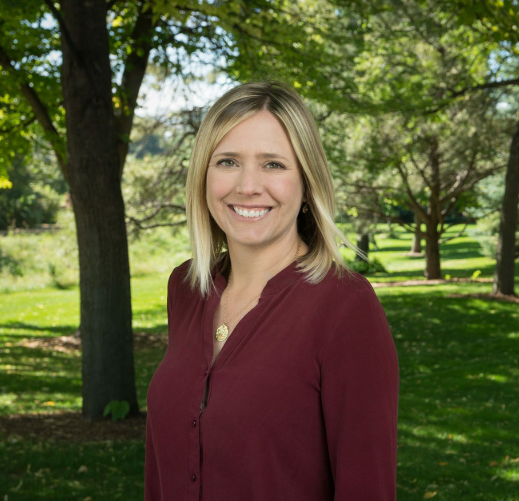
As SSF Director, Dr. Schultz works on global sustainability challenges, strengthening interdisciplinary research networks and expanding climate and sustainability education pathways. She chatted with me from her office on the oval, the tree-lined older part of CSU’s campus, sharing about her early leadership experiences with Outward Bound, influences from the Quaker philosophy, her thoughts on emergent leadership and how she’s building relationships across departments at CSU as she works to bring future-oriented insights into practice for students and practitioners surrounding sustainability sectors.
Jordana Barrack: Thank you for taking the time to chat with me today. I’ve gotten to know you through our work together exploring futures insights, but your main body of work encompasses so much more! Can you describe in more detail how you spend your time directing the School of Sustainable Futures?
Dr. Courtney Schultz: I spend about 30% of my time on research programs, looking at things like how people are understanding the human relationship with old-growth forests around the country or how we’re tackling fire management and trying to make it more contemporary and responsive to places and communities. That was the type of content that drew me into the academic world. So I continue a lot of fun research.
Then the rest of my time, about 70%, is leading the school. The big parts of my job include setting strategic direction, supervising and mentoring, and developing people, which is one of my favorite things to do. And then managing our budgets and fundraising for basic operations of the school. I get to spend a lot of time overseeing and designing our programs. I have a lot of help on the implementation side, and it's really exciting to get to do some of the big-picture thinking. The challenge, of course, is when we're facing budget cuts or existential threats, I have to deal with those things too.
The School of Sustainable Futures (formerly known as SoGES: the School of Global Environmental Sustainability) is an interdisciplinary hub that includes programs at CSU’s Fort Collins campus, along with the CSU Climate Hub down at the Spur Campus in Denver.
Jordana: There are so many details that go into running the business of a School within a University system, but what are you working on right now that gets you the most excited?
Dr. Schultz: We're working really hard on launching a climate change major right now, and it's really challenging because it’s going to be the first truly interdisciplinary major on campus that has a shared core that pulls from across many colleges, with concentrations in a lot of different areas. Everything from science communication to physical climate science. There's just no analog for it.
The amount of negotiation, diplomacy and carefulness that has gone into the development of this degree has been really wonderful. It's a lot of work, but I think it's been great for building relationships and connecting a program across the campus environment. Now we're at the point where people actually have to decide if they like it and then get students to sign up!
Jordana: You’ve mentioned envisioning a futures program at CSU, and how that idea came to you in an almost mystical way. Can you tell me more about that?
Dr. Schultz: I've had this experience a few times in my life—the first time it happened to me was in my twenties. I wanted to go back and work for my second summer at Outward Bound in Montana, but a series of events happened that kept pointing me towards leading this international trip in Kenya. And I just had these experiences where it almost felt like the world was sort of steering me in a direction or kind of opening a path.
I worked for a Quaker school in my twenties, in their science program. Some of my Quaker friends told me about a concept called ‘way opening.’ They talk about how it's almost like a path will open in front of you when the time is right and you can go down it or not. There’s much more to it, of course, for people of the Quaker religion.
It's not something I know much about, not being a Quaker myself, but it’s something that spoke to me and that I enjoy paying attention to in my life, how opportunities show up. The idea of a futures program has been like that because I had a donor give me a book to read, and it was probably the fifth or sixth thing she'd given me, but I found it very compelling and I thought, what if we built a program around this? And I started looking around and realized there are a lot of similar programs around the world, but not as much in the U.S. And then I talked to you, and it was a passion of yours. And that's one of those things where I'm like, oh, that feels very serendipitous. It seems like the more we dig into this, the more opportunity there is.
Jordana: It's interesting to hear you describe what you learned at the Quaker school. Kim Jordan, Mighty Arrow’s founder, went to a Quaker high school and a lot of her personal philosophy, I think, has been shaped by that experience. Are there any other ways that experience shaped you as a leader?
Dr. Schultz: Another thing I learned working with the Quaker community is this concept around the sense of a meeting. Again, I don’t have a deep understanding of this, but at our school it was about how groups can come to a sense of what's right through deliberation. And I watched that happen in some really difficult decisions we had to make at that school. So I have a lot of faith in the power of working with partners, being patient, and knowing that through our collective insights and passions, we're going to find good directions forward.
Jordana: I've heard you say that you lead by emergence, and I’ve been so curious to ask what that means to you.
Dr. Schultz: I always think it's good for me as a leader to have vision and things that I want to work towards. But there are a lot of things that you discover along the way. For example, stepping into my role at SoGES, I discovered we have obvious things that need to be sunsetted or streamlined, and then there are things I have a new vision for. But then I bring in my assistant directors, and they are going to have different creative ideas that are going to make me uncomfortable at first. Usually because I don't understand them right away. Other people have a pretty different vision of what could work, and I really try to stay open to that because I feel like all of these people I work with have great perspectives and I don't want to get too tunnel visioned. I try to give myself space to let the connection between perspective and vision emerge.
It's really a case of adaptive management, where a door opens when I don't expect it. I just hold close to my heart a balance between two things. One is around good planning, hard work, and list making. Then asking what are going to be metrics of success, what do I need to aim for?
But the second is also trying to stay really open to possibility. As a group, we discover things together. We have to be stay nimble. Having a plan, and constantly reminding ourselves to not get too attached to it as leaders.
Jordana: When did you first think about yourself as a leader?
Dr. Schultz: Ha, well my mom would say that my kindergarten teacher said, “Courtney's a leader. She starts doing something and the kids follow.” But I have no recollection of that, and I don't think it was intentional. I think it was really when I started working for Outward Bound.
I signed up as a trainee. I didn't know where I was going to fit. I went to Montana for the summer, and for a while I was a course support logistics person, but very quickly I moved into leading courses and then leading groups of teachers who were leading courses. I don't think I was processing ‘oh, I'm now a leader.’ But that's the first time where I think it was very obvious I was in a leadership role.
It wasn’t something I thought about pursuing here at CSU until I started the Climate Adaptation Partnership. And then it was very clear I was leading groups and doing things that weren't happening otherwise. I had to rethink, maybe this is a skill of mine that I should honor.
So I organized a group around climate adaptation at CSU. It became clear it needed to be bigger than our usual intersections on campus. And so I started talking to more people across departments, and they wanted to come along too. So, we wrote a proposal and we received $200,000 to dig into this further. A few years later we pulled together a program to educate educators on how to incorporate climate into their curriculums. We pulled together classes to add a certificate program. And now we have a climate change minor at CSU. And then at some point I was like, okay, I'm leading something now.
Jordana: After that journey, how would you define leadership if you had to explain it to someone else?
Dr. Schultz: Sometimes I feel like leadership's about being the adult in the room, putting the mission before your ego. The notion of sidelining your ego is very overly simplified, and is not something I claim to do. But I do feel like it's about keeping your eye on the mission and what's important, and who you're trying to serve and what you collectively value. And hearing people—even when it's threatening or challenging, or even when people are being rude and acting out their own issues in front of you. And that's something I think I'm still growing into.
I've always been taught there are a lot of different types of leaders with different strengths. I'll see leaders who are great speakers and have a lot of charisma, and that's something I have to try to turn on at times. I don't think that's naturally my state though, which is ok. I think I'm naturally more deliberative and intellectual and empathetic as a leader.
I think I came into this space as a teacher, wanting to help students and people grow and find happiness. That's what my job at Outward Bound was. So I really try to stay focused on what I'm trying to accomplish and try to lead with positivity so that I can focus on why we're doing the things we're doing. But also to remember, I'm just a person. I've got my own quirks and style, and I'm going to try to lean into my strengths and ask for a lot of feedback along the way, too. So I don't think I've thought about any kind of clear vision of what a leader is, but I do think there are things I've learned along the way that have been really important.
Jordana: Is there anything you had to unlearn about leadership?
Dr. Schultz: When I’m in a leadership role, and I need to process my own doubts or my own insecurities, I'm not going to do that with my team. I will to the extent that it's okay to say to your team sometimes, I'm not sure or I got anxious about that. But I think people idealize you when you're in a leadership role, and especially as a faculty member with students, I think it's very important to say, I also don’t know what I'm doing sometimes. But I think learning to keep my own stuff separate, to have a peer group of leaders for those conversations and not process my own feelings or confusion or frustration with my staff. That's something I've really had to work on.
One thing I had to unlearn was that you don't have to carry the pressure to be able to do it all, and to find others who have those things that aren’t your personal strength.
That reminds me, we go through leadership training here at CSU, and one of the things they teach you is you're not going to ever have all the strengths. There are leaders of all different colors that have different strengths. And what's maybe most important is recognizing your strengths, playing to those, and then building a team around you of people who have different strengths. And I think that's something I really had to learn. I thought I need to learn to be a good leader, kind of like you're saying. It's a little more that I need to use my strengths to be a good leader and then figure out where I need help, figure out where my blind spots are and what to build around me to support me.
At Outward Bound, we'd give each other feedback at the end of every course on what went well and what didn't. The emphasis was on what we need to work on or improve. And that's valuable, but I don't think there was enough emphasis on what we did really well. I've learned —and I've read research about this—that if you go into a meeting thinking about your strengths, that’s effective. My strengths are really listening to people and I'm very contemplative and I can bring a playfulness. To focus on what you're good at. Positive psychology is really helpful.
Jordana: What keeps you motivated to work on hard things?
Dr. Schultz: A few things. I check in with my values pretty frequently. I tend to map out my values and what I care about, and then I feel how exciting it is that I get to have a job where I actually get to work on advancing these values. What a privilege. And that keeps me motivated.
So trying to keep that big picture in mind and practicing gratitude about having a life in which I actually have a pathway to have an impact on the things I care about. I think that's really rare and a real privilege. I think I've always just felt a huge ethic of wanting to give back and make a difference in the world. I used to spend a lot of time thinking about how I have a profound inheritance of colonization and privilege and oppression of peoples. That has led to a system where I have a lot of privilege as a White American. So I've spent a lot of time thinking about what I can give back. And having a place to do that, that's what really motivates me.
The more fun side of it is that I love exploring ideas. I love the intellectual exploration. So when someone's like, could we do this? I love to explore, to read about it, to research, to figure out what it would look like. And then that's when I engage with a team and I say, do you like this idea?
Jordana: We’ve talked together about the value of experimentation, giving things a try even if there’s a chance of failure. Philanthropy is supposed to be a vehicle that allows organizations and ideas to take risks to try new things. But I think it's not serving that as well as it could be. How do we find that confidence to not be afraid to fail? To support our partners in trying new things? That's something I'm trying to figure out.
Dr. Schultz: It's so tough right now when we're just trying to persevere through a lot of persecution of things that we’re working on, or to have courage in the face of your fears and try new things. You have to have some level of stability and certainty and sense that what you're doing is valuable that you can ground in. If something risky was the only thing I was doing, I'd probably be a lot more panicked about whether it's going to work.
Some of it, I think, is having a community that you're comfortable exploring with. I think a lot about how we really need to experiment and ideate around public land law. We can't do that in front of people who we know don't share our values, who are going to take our ideas and use them for exactly what we don't want. So that's one reason why we don't see a lot of experimentation in front of Congress. But we have to create spaces where people really learn and live the culture of collaboration and don't feel so threatened that you don't feel comfortable sharing little baby ideas and things that might be terrible ideas in retrospect. So some of it's creating the community for that, I think.
Jordana: Last question, you work on Colorado State University's campus, surrounded by the next generation of our workforce, students stepping into their careers for the first time. If you had any advice for these emerging leaders, what would it be?
Dr. Schultz: It's to follow your passion and to be adaptive. I think as much as one can—and there are obviously major constraints that some people face, whether they're physical or economic or whatever they might be—but I think there's something really important about following the things that fill you up emotionally and intellectually. That's what keeps you going in the long run in your career. And it's where you can really have impact.
I really encourage people to trust their instincts about what they're really passionate about. I think that's how we stay motivated and effective. And as I say that, I also recognize we're in an economy that's building 10,000 jobs a month instead of a hundred thousand jobs a month, the constraints on that are more and more challenging.
Finding a way to make a living and support a family, whether it's your parents or your kids, I think is also really important. So I say that, wanting to recognize that you have to be in a good position to actually do that. And then just being adaptive. So many opportunities and changes arise, that you have to be pretty adaptive to what comes up and recognize that you don't really know your path as a human being, and that's hopefully exciting and not too terrifying.