
Toward a More Just—and Delicious—Food System With Agroecology Commons’ Jeneba Kilgore
For Jeneba Kilgore, co-director and co-founder of Agroecology Commons in Oakland, Calif., her work is rooted in something real and tangible: the taste of good food.
“I grew up in the kitchen and I'm really passionate about local food, for the flavor and the nutritional value,” she says. “But honestly, it's mostly the flavor. Food tastes so much better when it's fresh and seasonal and locally grown.”
Wanting the tastiest, freshest produce herself—and believing everyone should have access to it—is part of what pulled her along the path toward community action, working toward a more just food system. With a background in business, specializing in cooperative community economics, she calls herself a “numbers person.” But it’s the food, and the people who grow it, that light her up.
“If you want to have a good time, just hang out with a farmer,” she says. “I always end up with a basket full of goodies in my hand.”

Photo credit @Agroecology Commons
Building economies to nourish local communities
Kilgore co-founded Agroecology Commons in 2020 with the desire to make delicious, nourishing local food accessible to everyone, thereby also helping local economies. At the time, she’d been working at West Oakland’s worker-owned Mandela Grocery Cooperative, where she was deemed an essential worker during the COVID pandemic. Observing people struggle during that period and watching the rise of the Black Lives Matter movement, she felt the need to do more to support others.
“Agroecology and the founding principle of self-determination, I felt, captured everything,” she says.
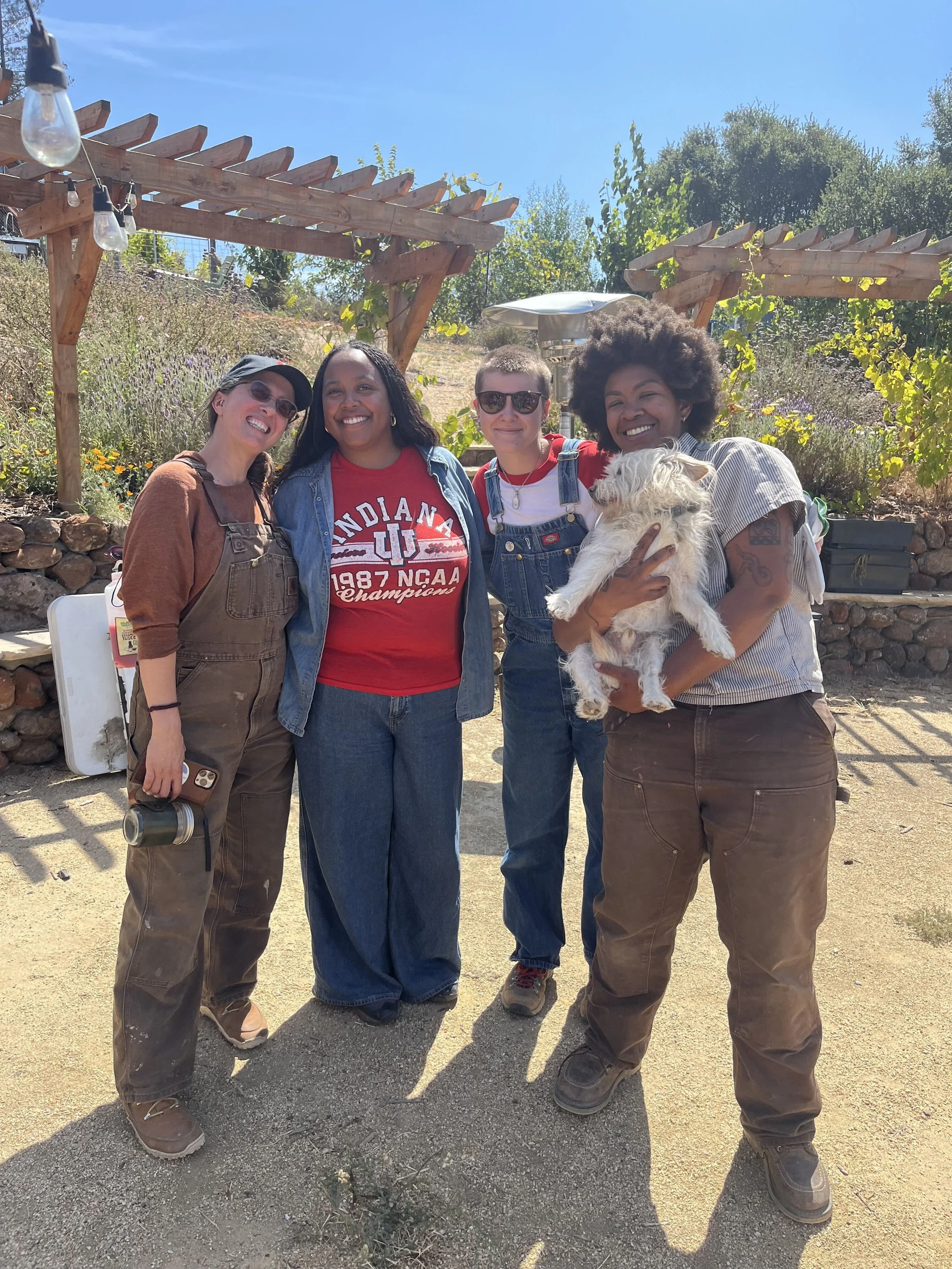
Kilgore slowly transitioned to her role with Agroecology Commons, aiming to help small-scale farmers sustain not only their business but also their livelihood. She wanted to facilitate relationships with values-aligned markets and businesses, intentionally building an economy that would nourish local neighborhoods and communities with local food.
Having studied cooperatives for her degree, this was a perfect fit. All of the group’s work is done through a model of cooperative governance, including shared and rotating leadership, participatory planning and budgeting and a compensation equity process with a social justice lens.
Today Agroecology Commons works to advance food sovereignty and ecological justice through knowledge sharing, land stewardship, networking and solidarity. In the years since its inception, the group has provided farmer-to-farmer education, apprenticeships and mentorships, a tool lending library and cooperative incubator plots to support farmers. Their Food Sovereignty Seed Grant Program has awarded more than $400,000 in grants to beginning, aspiring and urban farmers. They focus strategically on supporting wellness for farmers and supporting access to land and resources for BIPOC, queer, poor and working-class farmers.
The collective is composed of people from varying career and educational backgrounds, with artists, educators and business owners working alongside farmers. Acknowledging the multiplicity of every individual is part of the plan, allowing people to live expansively when culture may pressure them to fit into a particular box. This diversity brings an important sense of joy and creativity to the work, Kilgore says, and varying perspectives also result in more interesting solutions.
“I think being creative is just the willingness to dream and think about what else is possible instead of being stuck in the systems that we've been passed down,” she says.
Helping local farmers from the very start
Agroecology Commons is focused on supporting people no matter where they are on their food sovereignty journey. For beginning farmers, that means farmer training that's rooted in agroecology and cooperative principles. After that, farmers can apply for a seed grant or an apprenticeship where both the apprentice and the host farmer are paid—which is rare and important, Kilgore points out.
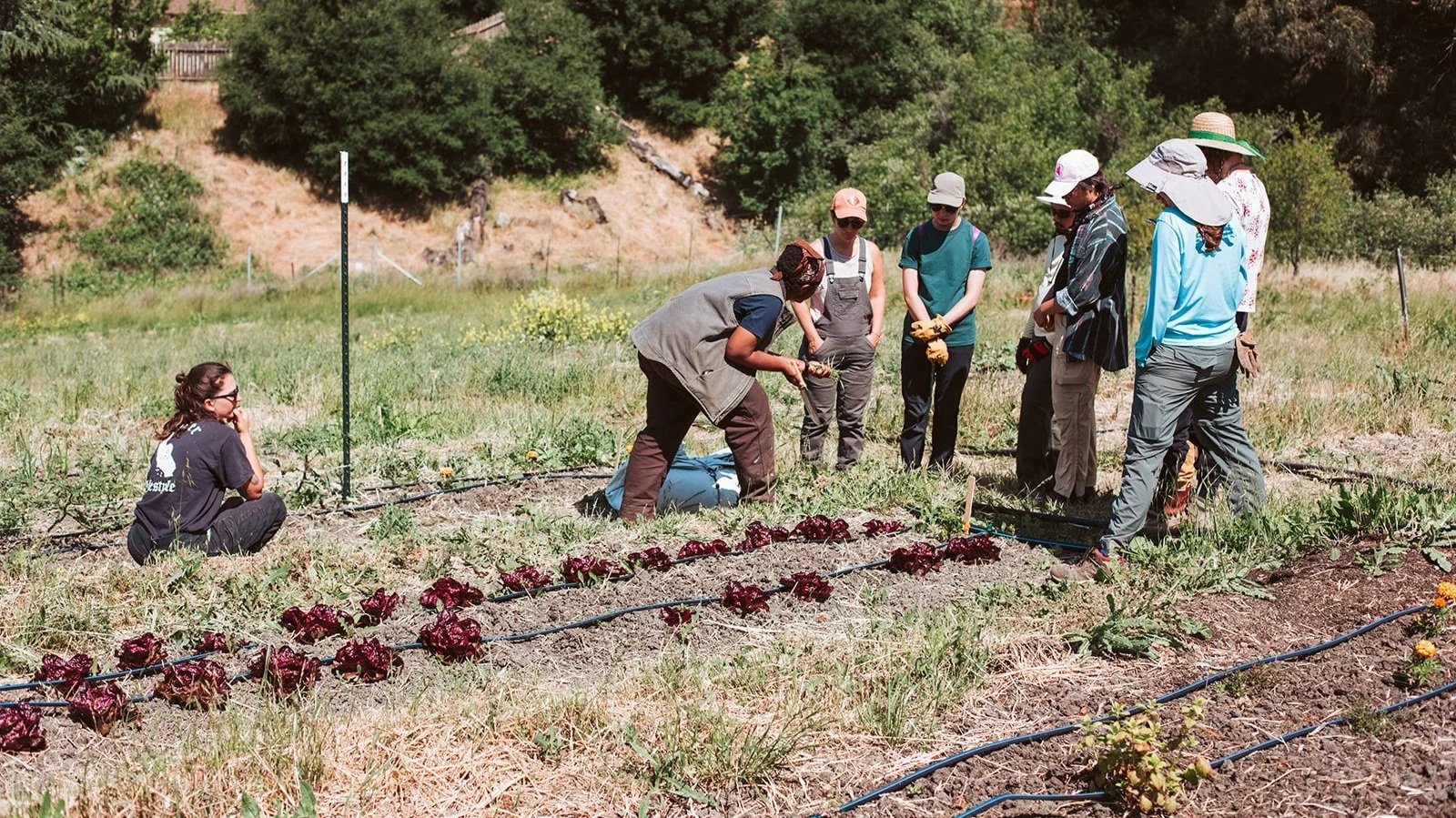
Photo credit @Agroecology Commons
“Farmers are wildly underpaid even though they have the most important and also the hardest business to maintain,” she says. “There isn't enough respect or understanding of what it takes.”
At Agroecology Commons three-acre incubator farm, people have the chance to do trials and test out growing things with preexisting physical infrastructure like irrigation and a greenhouse as well as the knowledge and assistance of mentors. New farmers get an understanding of what day-to-day farming looks like without the overhead required to start from scratch.
The newest opportunity Agroecology Commons is focused on is still in the works: They’re under contract on 45 acres in Santa Rosa to create a cooperative farm for sharing knowledge, skills and infrastructure as well as marketing channels, kitchen storage and tools.
“There will be a small incubator farm where the intention is to let people try it out for a short term,” Kilgore says. The ultimate goal is to support people in finding larger options and scale systems to help farmers sustain themselves. A land commons, an ag park, an incubator, it’ll be what the farmers need at what stage they’re at. “We really are just focusing on what happens when we give farmers access to land.”
There’s a hiccup, though: Funding for the new cooperative farm, which was under a federal United States Department of Agriculture (USDA) grant, was cut along with so many other grants last year. Instead of letting it go, Agroecology Commons sued the USDA.
Kilgore said the USDA oversimplified their work because everyone is invited and included. She says, “Yes, we prioritize queer and trans people. Yes, we prioritize BIPOC people. And the only reason we turn people away is because we have limited space. And if you're interested, yes, you're absolutely welcome to join if there's capacity and all of that."
Kilgore continued, “The irony of shaming us for teaching people about food justice hits at the exact same time as everyone is complaining about how expensive eggs are. I mean, this is exactly why we need to be talking about food justice. So it also just showed their ignorance.”
Twenty-four other grantees joined the lawsuit and they received a preliminary injunction in court. For now their funding is still safe. But Kilgore says it’s hard to think about moving forward with such a large project when it’s obviously threatened.
“We're still looking over our shoulder and just waiting for the next hammer to fall,” she says.
One good thing that’s come from the grant cancellations, Kilgore says, is that people got angry and are even more willing to work together to figure things out. As a 501c3, Agroecology Commons is legally able to accept funding and donations, so they’re also turning to foundations and their community to sustain their work. But ultimately the intent is to build systems and opportunities for earned revenue and pivot to a cooperative structure.
They want to provide education for free, but acknowledge that Agroecology Commons is ultimately accountable to whomever is paying for that education. Accepting federal money means they’re accountable to the government. But charging fees for services, courses and training would mean they are accountable to the community they’re supporting instead.
“So we’re leveraging the foundation money to bridge the gap,” Kilgore says. “To be accountable directly to our community, with no middleman, is the goal.”
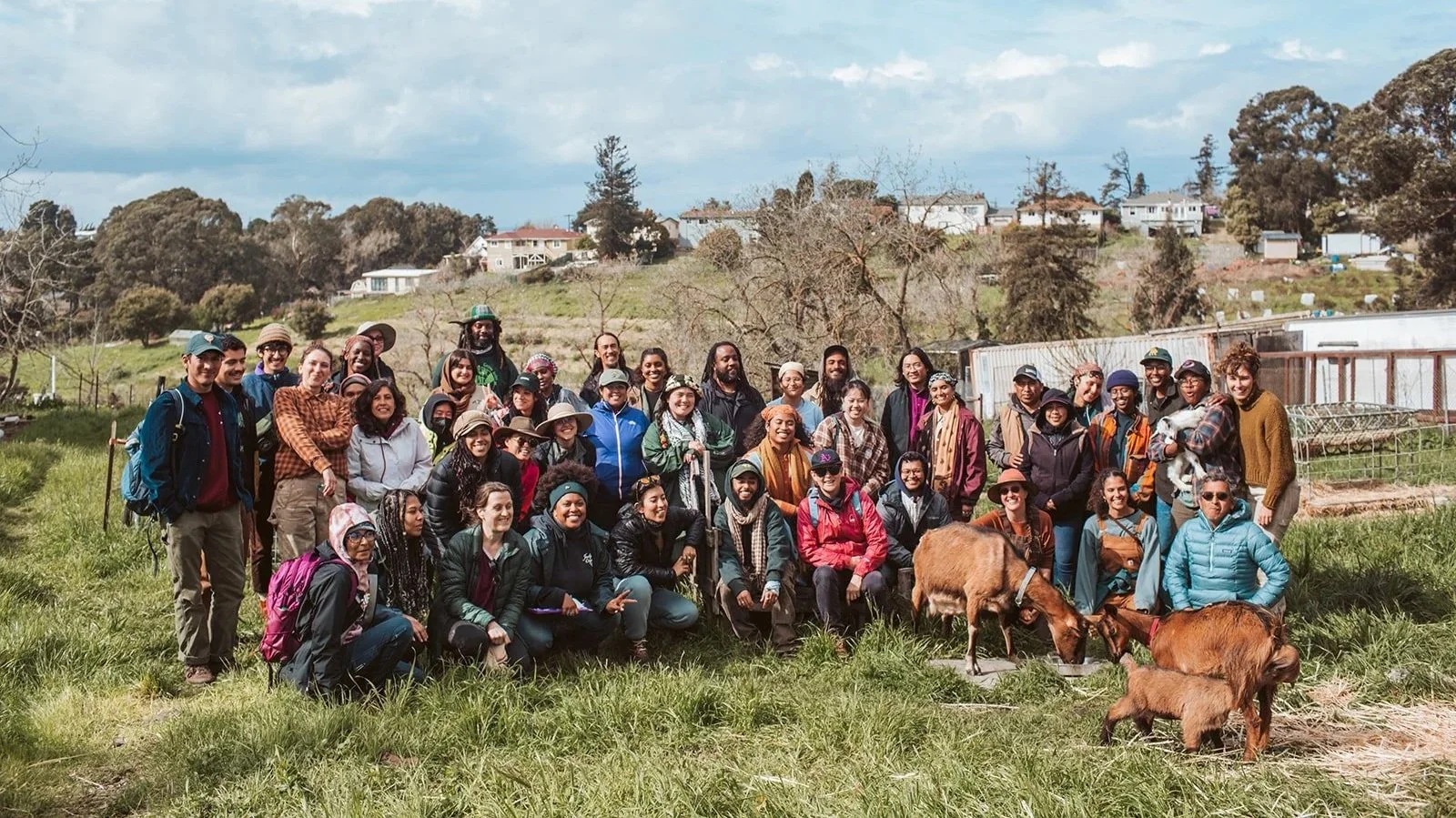
Photo credit @Agroecology Commons
Toward more food sovereignty
Ultimately their vision is a future in which food and farming systems are based on cooperation and sovereignty. That may feel far away, but Kilgore says every dollar we spend now as individuals is voting for how we want our society to be.
For example, Kilgore shares that she tries to minimize shopping at big box stores in favor of local shops, but when she needs supplies from a bigger store, she tries to shop within her city rather than online because then the taxes are going to the community. Kilgore says, “And if you’re able to get food from someone you know or someone that knows the person who’s growing the food, the care and the flavor and the nutrition and the education and the recipe and the stories that come along with that… Instacart could never match it.”
Kilgore points to Localize and other apps that help connect shoppers with farmers, ranches and butcher shops in their area, urging people to consider how they might even grow a bit of food themselves, even if it’s microgreens indoors.
“What are all the different conditions that we each thrive in? Do you need sunshine today or do you need extra water?” Kilgore shares that caring for plants can connect directly to how we care for people.
“Just lean into curiosity about where your food is coming from,” Kilgore says. It’s one more step toward connecting with nature and a move toward food sovereignty.
For more about Agroecology Commons, visit agroecologycommons.org and sign up for their newsletter. Donations can also be made directly through their website.
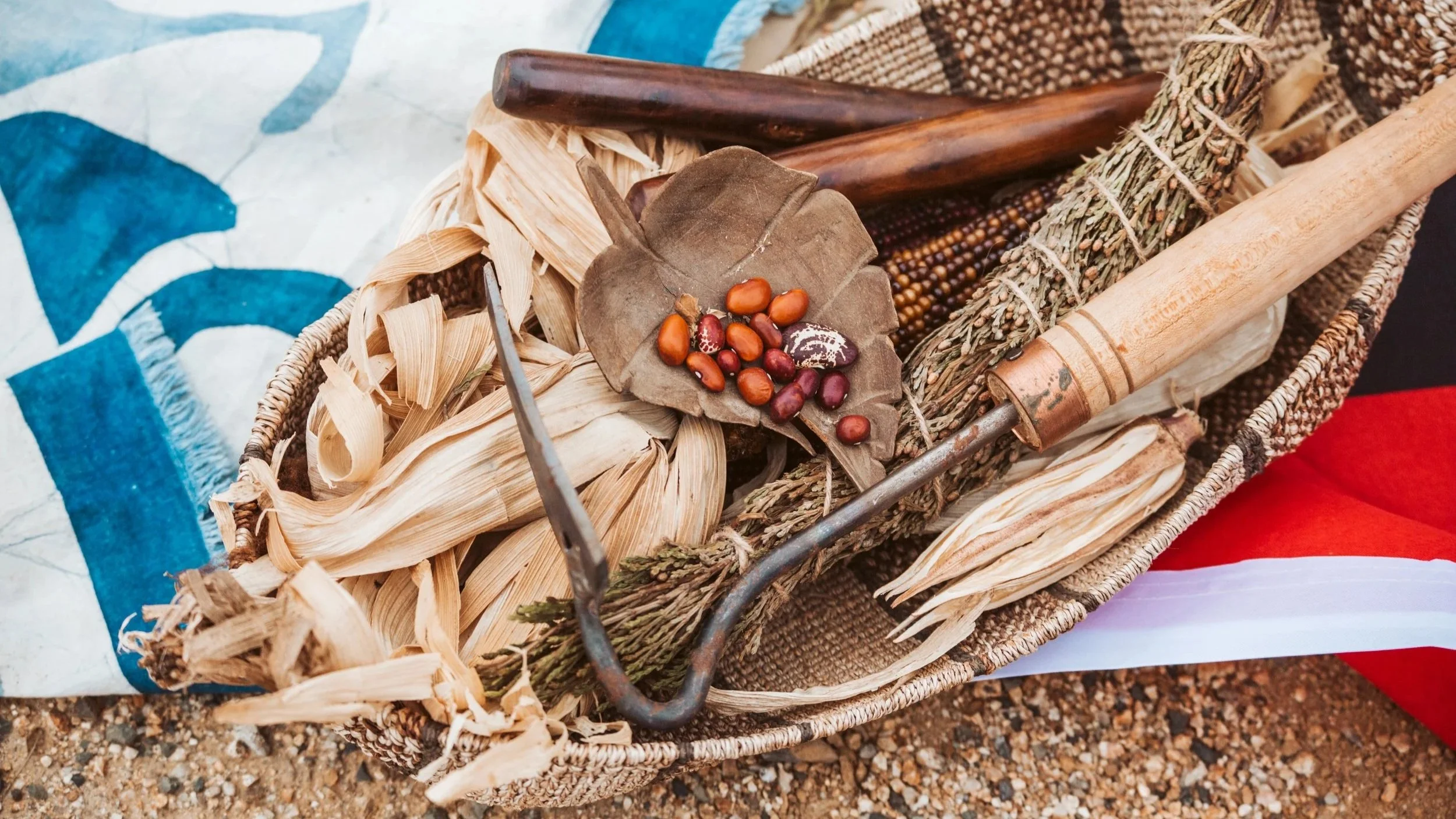
Photo credit @Agroecology Commons
###
We’re in a defining moment—a moment where we can choose to be overwhelmed, disconnected and discouraged, or where we can choose to be positive, embrace change and lift up the work of others seeking a better future together. We’re proud to support the work of the people and organizations out changing this world for the better—for all of us. Some may be small, some large. All are mighty. Each month, we highlight one of our Mighty Partners and we encourage you to get to know them, support them, and share their work with your friends, families and colleagues. Let’s get to work.