
Fresh Perspectives: Mighty Arrow Intern Nora Belongie on Youth Leadership, Philanthropy, and Funding Colorado’s Future
When high school student and climate advocate Nora Belongie joined the Mighty Arrow Family Foundation as a summer intern, she brought a proven track record of local youth leadership—including helping introduce the Climate Seal of Literacy to Colorado high schools. Over the summer, Nora shifted her focus from grassroots student organizing to the strategic world of grantmaking. Tasked with examining Colorado’s most pressing environmental challenges, she conducted a deep dive into 20 local nonprofits to explore the critical intersections of air and water quality. As Nora Belongie wraps up her internship with the Mighty Arrow Family Foundation, we sat down with her to share what surprised her about behind-the-scenes nonprofit work, the key insights she gained on collaborative philanthropy, and the inspiring organization she selected to receive a $10,000 capstone grant.
Jordana Barrack: What brought you to this internship with Mighty Arrow? And can you tell us about your main project this summer?
Nora Belongie: Environmental advocacy has been something I’ve been passionate about throughout high school. As the co-president of Fort Collins High School’s environmental club, I’ve had the opportunity to work on projects that encourage sustainability and environmental education. One of the experiences I’m most proud of was helping bring the Climate Seal of Literacy to Colorado high schools and helping students earn their seal. That experience showed me how important education is in creating long-term environmental change.
When I heard about the internship with the Mighty Arrow Family Foundation, I was excited because it gave me the opportunity to look at environmental work from an entirely different perspective. Instead of focusing on student leadership or school initiatives, I was able to learn how philanthropy helps nonprofits create change across Colorado.
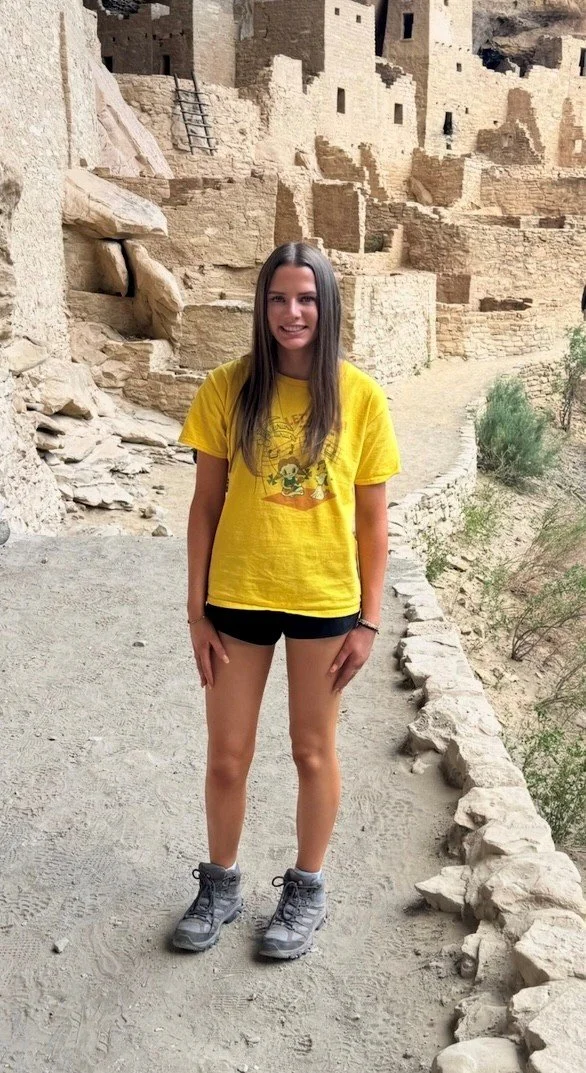
My main project this summer was researching 20 Colorado nonprofits focused on improving air quality and water quality. I interviewed leaders from organizations across the state, learned about their work, compared different approaches to solving environmental challenges, and ultimately recommended one organization to receive a $10,000 grant. It was an incredible opportunity because I wasn’t just learning about nonprofits—I was learning how thoughtful grantmaking can strengthen the work they’re already doing.
Jordana: Through your research, you highlighted two distinct yet connected challenges that stood out above everything else in Colorado: water quality and air quality. Why did those two issues stand out for you? Any specific story you can include for what brought these challenges to the forefront for you?
Nora: Air quality and water quality stood out because they’re at the center of so many environmental challenges in Colorado. Whether it’s wildfire smoke affecting the air we breathe, drought impacting our rivers, or development putting pressure on natural resources, these issues touch nearly every community in the state.
One thing that really stood out to me was that no two organizations approached these challenges the same way. Some focused on restoring rivers and protecting wildlife, while others worked on reducing pollution, advocating for stronger policies, or educating communities. At first, I thought I’d end the summer deciding which issue was more important. Instead, I realized that air and water quality are deeply connected, and protecting one often means protecting the other. That perspective was one of the biggest lessons I took away from the internship.
Jordana: Over the course of the summer internship you researched 20 Colorado organizations in total and conducted in-depth interviews with leaders at nine of them. How did you choose which organizations to research? And what made you curious about the final leaders you chose to interview?
Nora: I wanted to research organizations that represented different approaches to environmental protection. Some focused on conservation and habitat restoration, others emphasized education, policy, advocacy, or community organizing. Looking at organizations with different missions helped me better understand the wide range of work happening throughout Colorado.
When deciding which leaders to interview, I wanted to hear from organizations whose work approached environmental challenges differently. I interviewed organizations including Colorado Rising, Earthworks, Coalition for the Poudre River Watershed, Trout Unlimited, Colorado Water Trust, The Nature Conservancy, Rios to Rivers, Green Light America, and 350 Colorado. Even though their missions were different, every conversation reinforced how important collaboration is in solving environmental problems.
Jordana: You spoke about wanting to learn more about how nonprofit organizations work and function on a day-to-day basis. What did you learn? And what was the most surprising thing you learned about how nonprofits actually function behind the scenes?
Nora: One of the biggest things I learned is that nonprofits spend just as much time building relationships as they do carrying out projects. Before this internship, I mostly saw the finished product—a restored river, a volunteer event, or a successful advocacy campaign. I hadn’t realized how much planning, fundraising, grant writing, collaboration, and communication happen behind the scenes to make those things possible.
I was also surprised by how collaborative the nonprofit community is. I expected organizations working in similar areas to compete with one another, but instead I found that many of them regularly partner on projects, share resources, and support each other’s work because they recognize that environmental challenges are too large for any one organization to solve alone.
Jordana: How has your research changed how you think about nonprofits and what it takes to protect our environment and healthy ecosystems? Any key takeaways you’d like to share with other family foundations and individuals looking to support nonprofits working on these issues?
Nora: This internship showed me that protecting the environment isn’t just about one cleanup project or one policy change. It’s about creating systems that allow organizations to continue making progress over many years.
It also changed how I think about philanthropy. I realized that grants aren’t simply financial support—they’re investments in people, partnerships, and long-term solutions. Family foundations have an opportunity to strengthen organizations that are already making meaningful impacts in their communities.
One thing I’d encourage anyone interested in supporting nonprofits to do is spend time listening. Every organization has its own strengths and serves different communities. Understanding those differences helps ensure funding goes where it can make the greatest impact.
Jordana: As a part of your project, you had the opportunity to select one organization to receive a grant. Who did you choose and why? Was it a person that inspired you, a story you connected with or something else that fueled your decision to fund this organization? Any other factors?
Nora: I selected Colorado Rising because I was inspired by its commitment to empowering local communities to protect their health and environment. Throughout my research, I saw that lasting environmental change requires both strong policies and engaged citizens, and Colorado Rising does an incredible job of helping everyday Coloradans become involved in decisions that affect their communities.
As someone who has worked to expand climate education in Colorado schools through the Climate Seal of Literacy, I connected with the idea that informed people can create meaningful change. While our work focuses on different audiences, both efforts are rooted in the belief that education and community involvement lead to stronger environmental outcomes. I also appreciated that Colorado Rising works on issues that directly impact Colorado communities today while helping build long-term environmental protections for the future.
Jordana: What’s your biggest takeaway as you wrap up your internship with Mighty Arrow? Anything specific you’ll be taking back with you as you start your senior year of high school?
Nora: One of my biggest takeaways is that real impact takes patience. The nonprofit leaders I spoke with weren’t looking for quick wins, they were building relationships, developing long-term solutions, and staying committed to their missions even when progress was slow. It made me realize that meaningful change has to be built over time.
As I head into my senior year, I want to carry that mindset with me. Whether I’m working on environmental initiatives at school, helping students earn the Climate Seal of Literacy, or pursuing future opportunities, I’ll remember that lasting impact comes from staying committed, asking good questions, and continuing to learn.
Jordana: Having worked to help bring the Climate Seal of Literacy to Fort Collins High School yourself, you’ve seen firsthand how student-led climate advocacy creates real ripple effects. Young people aren't just waiting for future leadership roles—they are actively shaping local policy and environmental education today. Can you share a bit more about why it’s important to support student and youth leaders as they step into advocacy and movement building?
Nora: One of the biggest lessons I’ve learned is that students don’t have to wait until they’re adults to make a difference. Helping bring the Climate Seal of Literacy to Fort Collins High School showed me that students really can influence their schools and communities when they’re given the opportunity.
Supporting youth leadership is important because students bring creativity, energy, and a sense of urgency. We also have a unique perspective because we’ll experience the long-term impacts of today’s environmental decisions. When young people are trusted with leadership opportunities, they don’t just develop skills, they inspire other students to become involved as well.
Jordana: As a young student leader yourself, what would you like to see more of from the people making policy decisions for your community? Why is it important to you that we prioritize working on climate change solutions?
Nora: I’d love to see policymakers continue creating opportunities for young people to participate in environmental conversations. Students care deeply about these issues, and many of us are already volunteering, leading clubs, and educating our peers. Giving students a seat at the table allows decision-makers to hear perspectives from the generation that will live with the consequences of today’s choices the longest.
It’s important that we continue prioritizing climate solutions because they’re really investments in our future. Protecting clean air, clean water, healthy ecosystems, and resilient communities benefits everyone, regardless of age or background.
Jordana: The world can feel heavy and after deep diving into this work, what’s giving you hope?
Nora: The people. Every nonprofit leader I interviewed was incredibly passionate about making Colorado a healthier place. Even though they work on difficult issues, none of them seemed discouraged. Instead, they were focused on finding practical solutions, building partnerships, and helping their communities. That gave me a lot of hope because it reminded me that real change is happening every day. It may not always make headlines, but there are dedicated people across Colorado working tirelessly to protect our environment, and now I understand how much progress can happen when people work together.
Jordana: Anything else you’d like to share?
Nora: I’m incredibly grateful to the Mighty Arrow Family Foundation for this opportunity. It gave me the chance to connect with inspiring nonprofit leaders, learn about philanthropy, and gain a much deeper understanding of Colorado’s environmental landscape. As I head into my senior year at Fort Collins High School, I’ll carry these experiences with me. This internship strengthened my passion for environmental advocacy while also showing me that lasting change requires collaboration, thoughtful leadership, and a willingness to listen. I hope to continue applying these lessons wherever my future takes me.
…
Mighty Arrow is also grateful for the opportunity to partner with our local youth perspectives as we fine tune what we need to make an impact on today. Thanks for teaching us a few things too Nora!