
Out of the Woods, Into the Community: Rethinking Wildfire Action with Headwaters Economics and Taxpayers for Common Sense
While the human and economic toll of the wildfire crisis is staggering, catastrophic losses are not inevitable. Philanthropic capital and targeted advocacy can dramatically alter the trajectory of disaster response by shifting focus from reactive relief to proactive, systemic resilience.
To maximize the impact of every dollar invested, we must deploy resources where they yield the highest ROI: upstream risk reduction, smarter land-use policy, and fiscal accountability. Two of our partner organizations are spearheading this shift:
Taxpayers for Common Sense (TCS): A nonpartisan watchdog promoting fiscal responsibility, federal policy reform, and high-yield pre-disaster mitigation investments.
Headwaters Economics: An independent research group equipping local leaders with data-driven strategies for land management and community resilience.
We spoke with Steve Ellis and Autumn Hanna, President and Vice President of TCS, and Patty Hernandez, Co-founder and Executive Director of Headwater Economics to explore how strategic funding, policy reform, and actionable data can turn the tide on the wildfire crisis
Our historic focus on suppression isn’t working—it’s time to invest beyond that.
“When it comes to wildfires, there's a reason to respond in ways that are more aggressive and innovative and creative than we have in the past,” says Hernandez. “We’re seeing wildfires burning through neighborhoods, burning down entire communities. The signals that we see in everybody's insurance premiums and eligibility and access to insurance are very clear. It merits very serious action.”
When it comes to return on investment, or avoiding economic losses, we need to be widening our lens to include risk reduction, Hernandez says. “What I mean by that is retrofitting our existing housing stock, passing wildfire building codes so that newer homes are built to standards that can survive disasters—all of that planning has to happen absolutely.”
Through research and community assistance, Headwaters Economics is helping identify strategies—such as land use planning and building for wildfire resistance—that reduce risk. It takes time to implement these kinds of strategies, but they have a growing list of more than 60 success stories across the West of communities finding creative ways to build their resilience to these kinds of disasters. One example is in Colorado, where many rural communities were struggling to implement a new statewide building code.
“In Colorado, many of these communities don't have any building code in place currently or have codes or ordinances in place that conflict with the new statewide wildfire building code. Some of them have no enforcement staff whatsoever,” Hernandez says. “We worked with a set of communities through our Community Planning Assistance for Wildfire program, offering them really in-depth technical assistance to overcome their hurdles to be able to successfully adopt the code. And there are already 15 of these predominantly rural communities in Colorado that would not have adopted the code otherwise, or at least with far less success.”
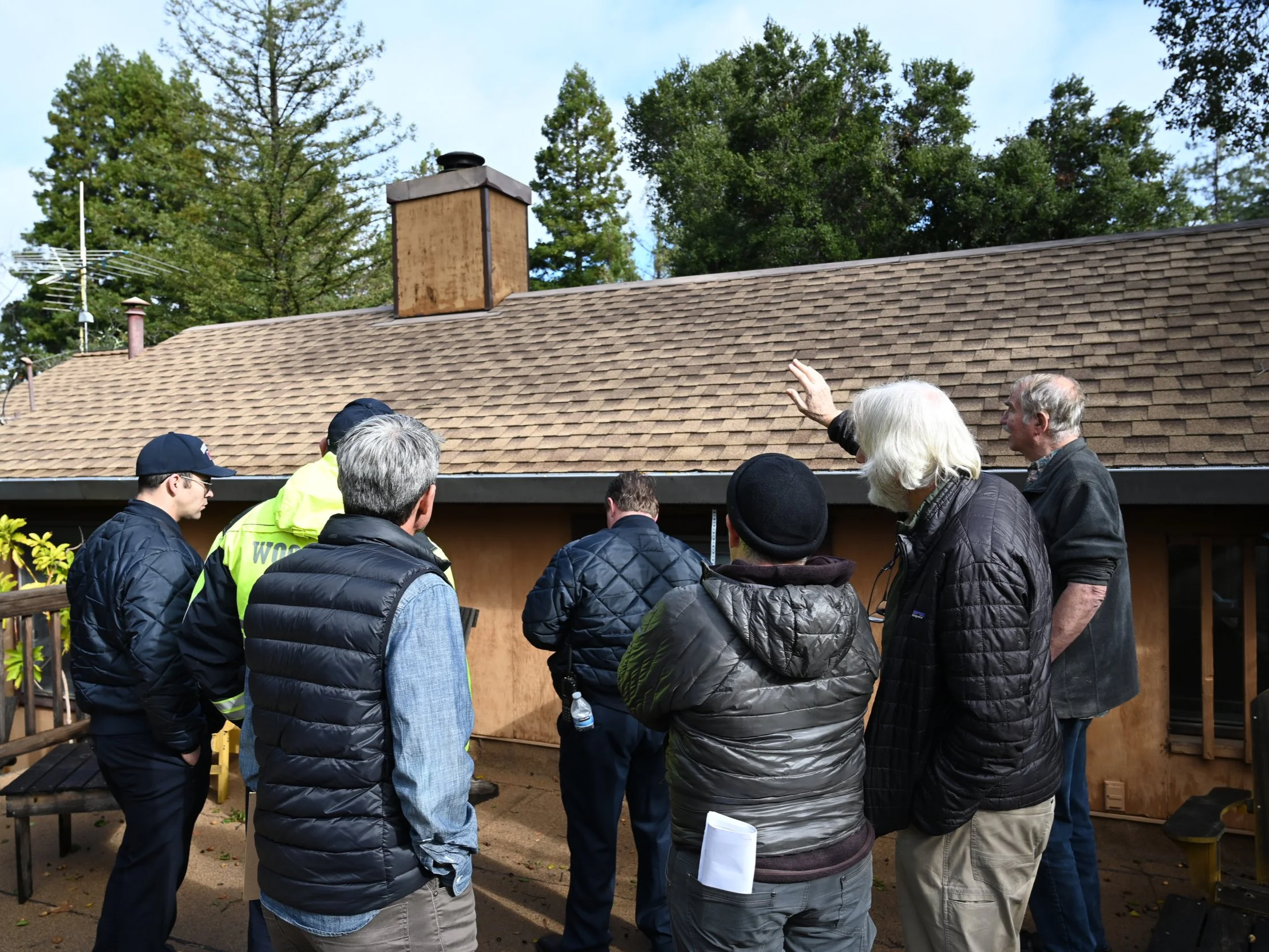
Photo credit @Headwaters Economics
To close the gap for less-resourced communities, creativity is key.
For many rural, less-resourced communities, it can be a huge struggle to implement the kinds of investments that will make a difference during fire season. That’s where creativity and boots-on-the-ground programs like Headwaters Community Planning Assistance for Wildfire (CPAW) come in. With technical expertise amassed through more than a decade of experience working on feasible and viable solutions, they’ve seen what actually works in the real world.
“We've seen ways that other communities in the past 10 years have gotten really creative, and we can share those solutions with local leaders, and they're really evolving over time,” Hernandez says. From sharing building inspectors to standing up self-certification affidavit programs to experimental programs like virtual home inspectors, they’re seeing new ways to implement viable solutions—and working to translate and amplify them, helping to scale them up to state and federal levels.
Fixing insurance starts with reducing risk.
As US wildfires grow more frequent and severe, homeowners face skyrocketing premiums, non-renewals, and insurer market exits in high-risk regions. This coverage crisis leaves many unable to afford or secure home insurance, ultimately threatening local tax revenues, municipal bond ratings, and critical public services across affected communities.
Headwaters Economics and Columbia University Climate School released a report that outlines five emerging pathways for wildfire insurance coverage in high-risk areas: voluntary certification programs, community-based catastrophe insurance, parametric models, FAIR state plans, and state regulatory reform. For each approach, they evaluated each pathway against four long-term goals: maintaining coverage, lowering premiums, filling coverage gaps, and incentivizing risk mitigation.
“Insurers are looking for actual verifiable change of risk on the ground. They have to see a change of risk if you want a meaningful change in actual insurability,” Hernandez says. “At the end of the day, we actually have to change the risk on the ground. And insurers are very clear-eyed about that.”
When it comes to affordability and eligibility, Hernandez says it’s time to shift the discussion to mitigation upfront, “That's where the leverage is.”
While insurance provides financial protection after a disaster, it also shapes proactive behavior by incentivizing wildfire-resistant building and landscape upgrades. Although no single solution exists, these approaches can lower damages and send clearer risk signals to homeowners well before disaster strikes.
“The real mechanism is for states and the insurers to be working on the upfront consideration of how risk is even assessed,” Hernandez says.
Federal programs need to be fixed—spending needs to be smart.
When it comes to federal wildfire spending, Taxpayers for Common Sense focuses on ensuring disaster spending is transparent, effective, and fiscally responsible. They advocate for smarter investments in mitigation, forest management and community resilience when it comes to the billions of taxpayer dollars allocated annually across numerous programs and agencies.
“Over the 10 years through 2026, we found $800 billion in wildfire adjacent spending. Of the $65 billion directly addressing wildfire, 55% went to response and only 15% to mitigation,” Ellis says. “We need to be better about investing our precious taxpayer dollars.”
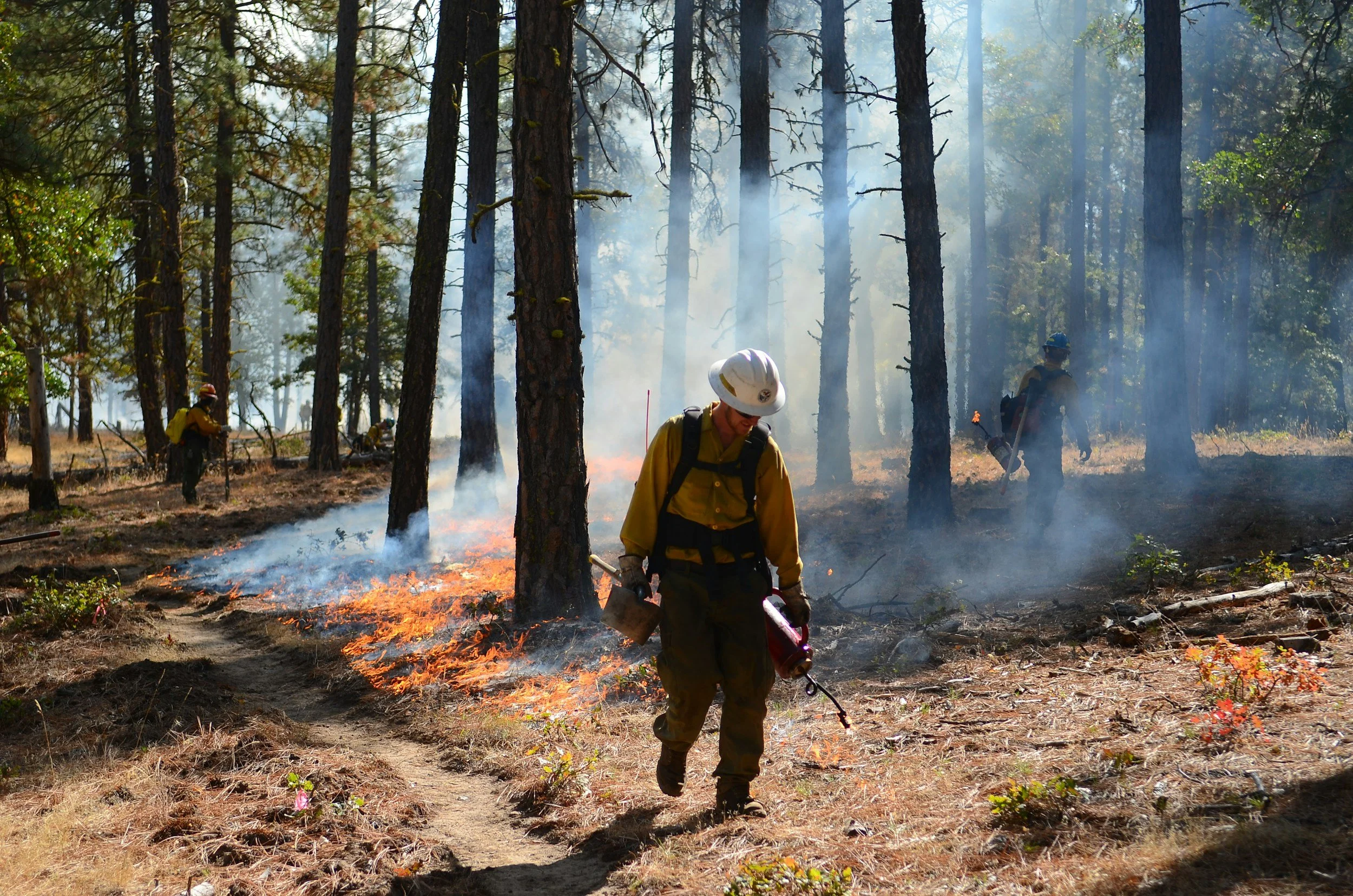
Ellis cites a 2019 study from the National Institute of Building Sciences, which found that every dollar spent on mitigation saves federal agencies $6 or more in post-disaster response. Wildfire mitigation in the study includes replacing roofs, managing vegetation to reduce fuels and replacing wooden water tanks. For every dollar spent on those up-front mitigation measures, federal agencies—and US taxpayers—will save $3.
“We need to be making these investments up front so they save us money in the long run,” Ellis says.
To that end, they are tracking spending and aiming to establish metrics for success. A big part of that is finding a balance between investment in mitigation and suppression.
For example, the United States Forest Service (USFS), within the U.S. Department of Agriculture responsible for managing 193 million acres of national forests and grasslands, plays a central role in federal wildfire suppression and mitigation. Over the last decade, USFS has directed between $3.2 billion and $7.3 billion annually across dozens of direct wildfire program line items, supplemented by additional funding streams that indirectly support fire management through broader forest health initiatives.
To improve USFS wildfire funding accountability and transparency, TCS supports: sustaining robust mitigation funding—especially in the Wildland Urban Interface—coupled with local co-investment incentives; extending the Wildfire Suppression Operations Reserve Fund past its FY2027 expiration to prevent fire borrowing; implementing a federal spending crosscut to track the $60+ billion in direct and adjacent wildfire line items; and instituting outcome-based performance metrics to evaluate actual risk reduction and loss prevention.

Photo credit @Taxpayers for Common Sense
“It’s important to understand the bias toward suppression, the interconnection of these investments and where dollars need to go,” Hanna says. “Where federal dollars are flowing, how can we direct or redirect them to focus on preventive measures, mitigation, and community resilience? This argument so often becomes absorbed in what's happening in our forests and wildlands versus what's happening in our communities and the areas adjacent to them.”
Hanna continues, “We like to say, let's get this out of the forest and into the communities and talk about building resilience.”
The Roadless Rule repeal is actually bad for wildfire mitigation.
This summer, the U.S. Department of Agriculture proposed fully rescinding the 2001 Roadless Area Conservation Rule, which currently restricts road construction and timber harvesting across 44 million acres of national forests. In a statement on the move, Hanna says, “Repealing the 2001 Roadless Area Conservation Rule in its entirety would recklessly expose taxpayers to billions in new liabilities from subsidized roads and money-losing timber sales. The Forest Service already manages more than 368,000 miles of roads and faces nearly $6 billion in deferred road maintenance. Opening millions more acres to road construction risks adding to that growing burden.”
While discussions of repealing the Roadless Rule have linked it to wildfire risk reduction, Ellis points out that roads are actually a leading source of ignition sites, and fires are statistically much more likely to start near them. Roadless areas in our national forests are already a net benefit to federal taxpayers and local communities. Ellis points out that those fiscal benefits of the Roadless Rule are also often left out of the discussion—like the initial construction of forest roads being subsidized and the long-term liability created. It’s investing in the wrong place, he says.
“Investment needs to be focused on the wildland-urban interface, on the areas in-between, not in these un-roaded areas,” Ellis says.
Wildfire can bring us together.
When it comes to federal disaster response, there’s been a disturbing trend toward politicization. But when it comes to wildfire, Taxpayers for Common Sense is aiming for bipartisan solutions.
“We're trying to bring people with different interests together around the dollars and cents,” Ellis says. “And there are places in wildfire policy where we have that agreement.”
One example is the Wildfire Suppression Operations Reserve Fund, which made sure that there were readily available suppression funds. Ellis says, “Even as we say we need to right-size spending, we cannot neglect the important needs of firefighting communities. We want to ensure suppression dollars are available when needed without diverting money from other program areas, which is what happened before the funding fix.”
On the local side, Headwaters Economics sees the power of working closely with community leaders where they feel the challenges and burdens firsthand. Wildfire is unique because a home is not just a victim of a fire, it's the fuel that catches its home next door on fire. Risks and solutions are both shared.
“Wildfire is one of those things where you can't do it all alone. It really does require this community level approach,” Hernandez says. “I think this is a really beautiful way of connecting to that piece of it.”
And while numbers and statistics can never truly reflect the consequences of wildfire, data is at the heart of better planning. And our Mighty Partners are shining a light on common sense and creative solutions that bring hope and community to the forefront.
“The science and the data are there that point to the solutions. This is a solvable problem,” Hernandez says. “It's an engineering problem, it's a policy problem, but not an insurmountable one. I see communities being incredibly creative. I see community leaders and local elected officials listening and wanting to support their communities in doing the very difficult work—together.”
As Hernandez shared with us, “This is hard, but it's not a mystery. We know how to proceed.”
For more, visit headwaterseconomics.org and taxpayer.net.

Photo credit @Taxpayers for Common Sense