
Beyond the Ballots: Courage California Institute’s Push for Everyday Civic Power
As the nation marked its 250th anniversary earlier this summer, the team at Courage California Institute sought to broaden the narrative around American values. The campaign, America, the Courageous, invited people across California and the country to share photos, videos and personal stories highlighting community pride, cultural diversity, civic participation and mutual care—emphasizing the everyday actions that strengthen our democracy.
“The story of America is still being written,” Irene Kao, Executive Director of Courage California Institute, says. And reminding voters that their voices matter—that their votes are what shape the story of America—is at the core of the organization’s mission.
As the most populous state in the U.S. and the 5th largest economy in the world—Courage California Institute envisions a progressive, equitable and representative California, powered by the people. Their mission is to unite and equip Californians to hold leaders accountable and take brave action for change.
We chatted with Kao about the concept of courage and the challenges of reaching voters when news fatigue weighs heavily. She’s proud of how California has served as a role model for other states, and hopeful about what’s to come. After our talk, we’re feeling hopeful too.
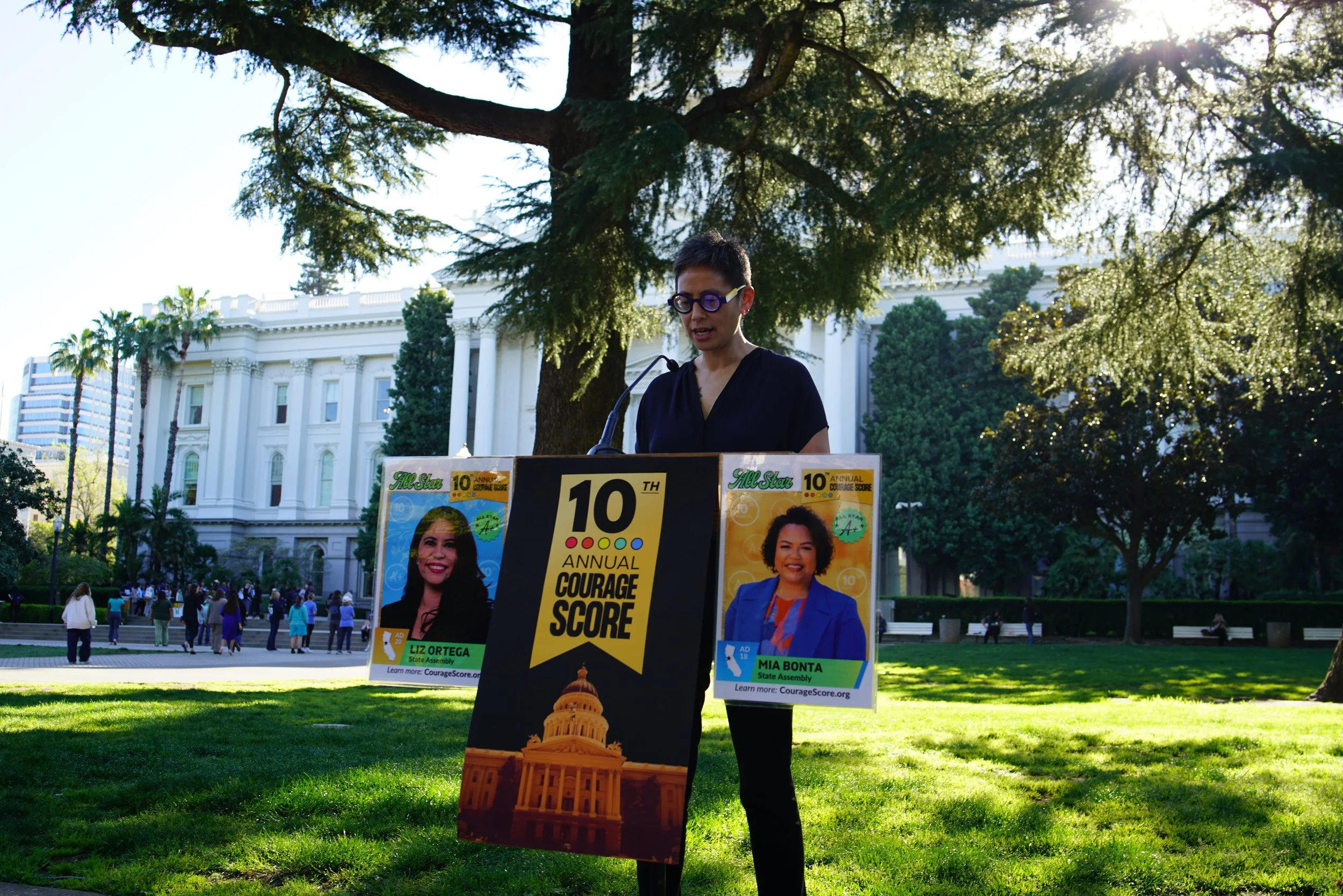
10th Annual Courage Score, photo credit @Courage California
What it means to choose courage
It can be easy for a lawmaker or leader to identify as progressive, but Courage California wants to press beyond labels. Kao says they want to look more closely at how the leaders actually behave when up against powerful influences and people, when it requires real backbone to stand up for their constituents.
“Courage to us speaks to this value, this quality in people that is beyond any partisan or party politics,” Kao says. “It is about choices people make in the face of specific challenges, influence or power.”
Not just in name, Courage is the through line for everything the organization does. One aspect of that is giving constituents the information they need to feel confident in speaking up to their elected officials. Which is why communications and education are at the heart of their work.
“Sometimes the folks who feel the least informed about what their elected leader is doing feel like they can’t do much about it,” Kao says. “Doing the accountability work is about ensuring elected leaders know, ‘Hey, your folks are watching. We're helping them, so they understand what bills you're voting for, against, and what money you're taking.’ We want people to be able to make those direct connections.”
One way Courage California Institute does this is through their annual Courage Score. By working with over 100 different progressive advocacy agencies throughout the state, they survey priority bills from the year’s legislative season, compiling a list of legislation on key issue areas like health care, housing, criminal justice, immigrant rights, the environment, consumer protections, workers’ rights and more. They monitor not only how legislators cast their votes, but also how close the votes were—because some votes take more courage to cast.
“It's being able to provide that transparency about what's happening in these decision-making spaces and making sure that everyone has access to that kind of information,” Kao says.
A new model for communicating
Americans’ civic duty doesn’t end with presidential elections—but with the 24-hour news cycle, staying up to date on important issues is exhausting. Voter overwhelm looms.
This is front of mind for Courage California Institute, and their sister c4, as they create ongoing campaigns. As bills get introduced, they work hard to translate huge, complicated legislation into the most understandable takeaways for everyday citizens. And if a federal bill passes that affects the state negatively, Courage California takes the lead in helping citizens still feel empowered to do something about it.
“We work with partners on a rapid response, so people can know their rights,” Kao says. “We try to get as much information out to people as possible. So even when at the national level things get really chaotic, people still felt like they had some power, some control over what they could do for themselves. We need to show people the very concrete, simple things that they can do.”
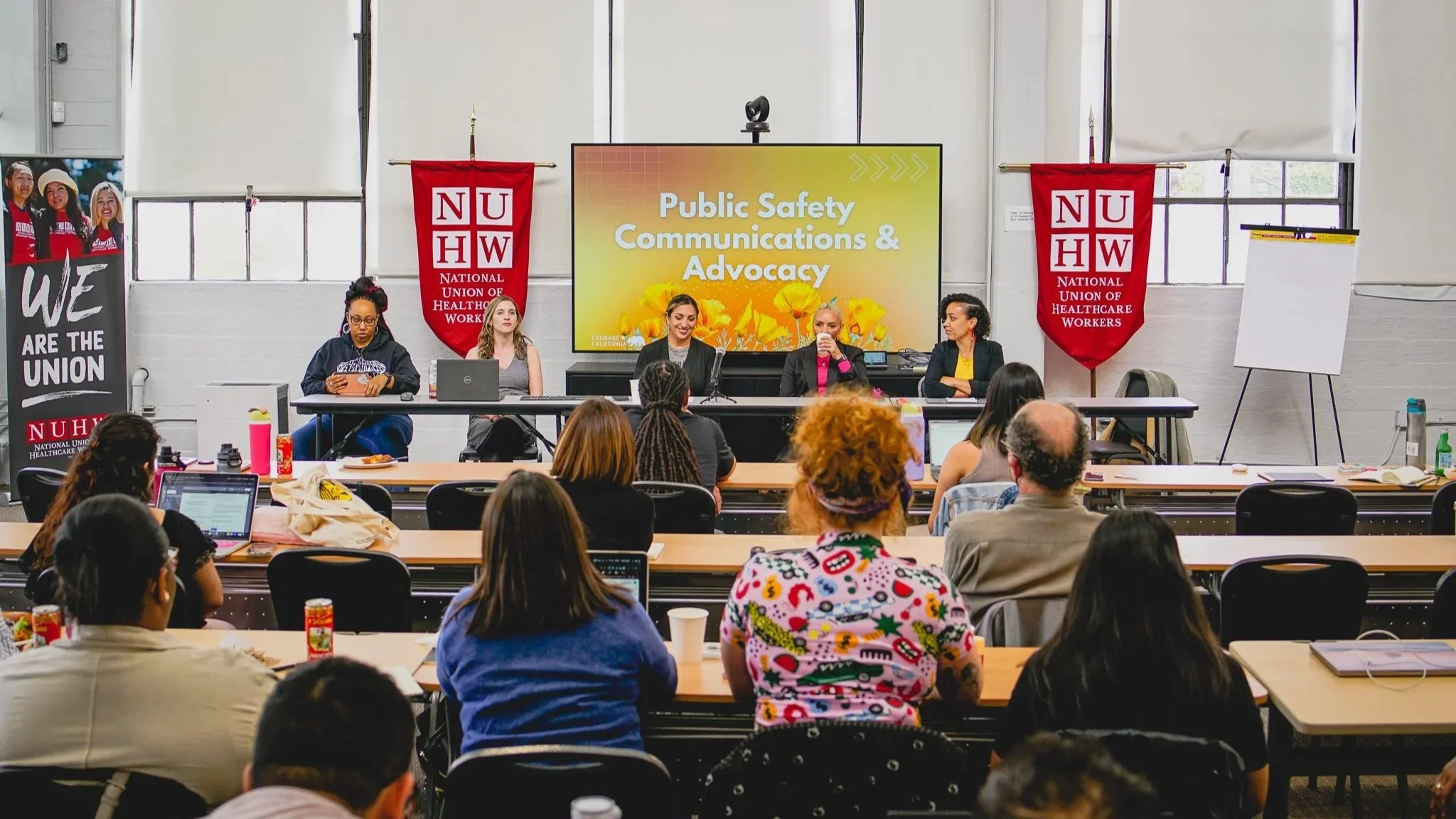
Photo credit @Courage California
Beyond resources on their website, to get these messages across to voters, Courage California is meeting people where they are—in their own everyday language instead of hard-to-decipher legislative talk.
“People can choose whether or not they pay attention to politics, but it can easily get very overwhelming,” Kao says. “Oftentimes everyone has their take on the story, but you have to be a political insider to understand what it's really about. So for us, it’s about speaking very plainly to people about what they care about and making those connections without giving them something that needs three or four footnotes to explain the situation.”
The sweet spot for them, she says, is the issues people know will affect them but they don’t talk about in everyday life much. Like posts about new state laws taking effect and what impact they’ll have.
“People want to know, and they care about it, but they don't want to have to dig really deep into different reporting about it,” Kao says. “It is very much about establishing Courage as a really strong, independent and trusted voice.”
California as a model
There’s often a misunderstanding about California, Kao says, that it’s so progressive that legislation that passes here could never pass in other states. But in fact, its diversity makes it a good test case for others.
“When we’re passing policies or working on campaigns, we’re constantly thinking about how to do it in a way that speaks to and works for people in really different geographies, very different kinds of communities,” Kao says.
For example, she says what many people picture when they think of California is the major metropolitan areas, when in fact they’re often working with very rural communities on basic issues like access to clean water. The diversity of California is what makes it challenging.
“We have some of the richest people in the world here in the state, but we also have a lot of deep poverty,” Kao says. It can be difficult to work out policies that work for everyone, but when they do, they can often serve as a template for others to learn from.
“Just a couple years ago, we helped to pass some environmental bills that would hold corporate polluters accountable or push them to be more transparent about their carbon footprint in the state,” she says. “And other states have gone on to use them as a guide.”
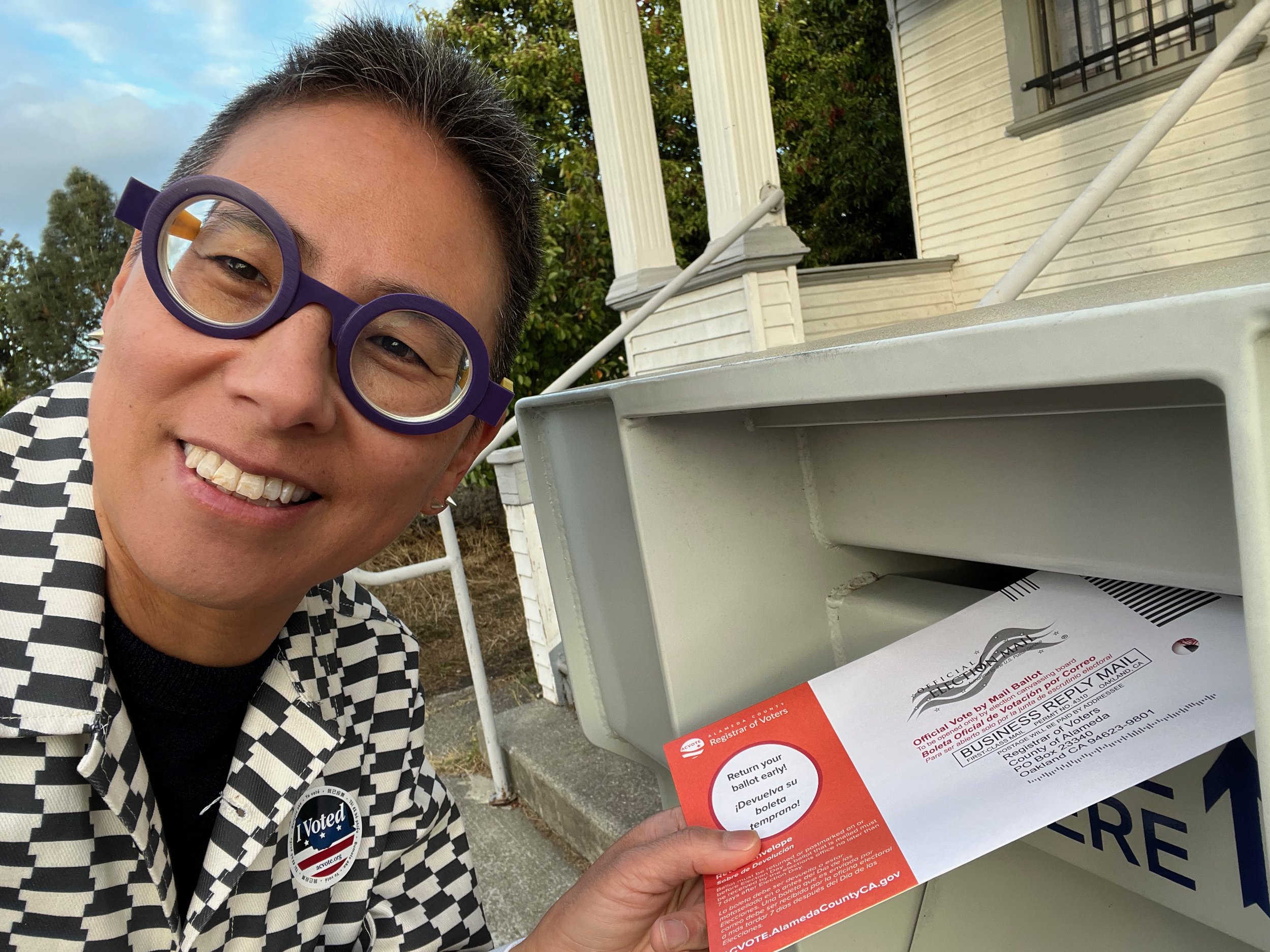
Photo credit @Courage California
America, the Courageous
Kao shared that even in these times of overwhelm and feeling inundated by bad news, more often than not, “when people spend time out in nature or within communities, that's when they feel reinvigorated. That's when they're reminded of what they're fighting for.”
Kao says that’s part of what fueled their 250th Anniversary campaign, an idea brought to life by Courage California’s Communications and Public Affairs Director, Angela Chavez.
“It's a celebration of us, and for us. It's a celebration of diversity of geographies, of a diversity of people, and of a diversity in thought. It’s what defines us as a people,” Chavez says. “And it’s really about reclaiming the image of America.”
Chavez says progressives need to do a better job of claiming those values as Americans, “We believe in freedom. We also view ourselves as patriots because we're working to make things better and stronger and more equal. We believe in the ideals of what America can be and should be. We are what makes America great. We, the people.”
The Courage California team is feeling hopeful going into midterms, reminding us that elected leaders on the ballot this year will be governing beyond the current federal administration.
“We need people who are thinking forward about what things could be like and look like,” Kao says. After years of what has felt like putting out fires and working reactively, this feels hopeful. “For me, this election has helped to re-inject a sense of optimism and forward thinking.”
Kao is quick to remind us that the future is ours to build, and their hope spills far beyond California’s state lines. She says, “This is a reminder to people that our definition of what America is—and what it could be—is really up to us as the people. It’s about remembering this American experiment, what made this all possible and why it's so powerful to be here.”
And with that, onward we go—with hope and courage.
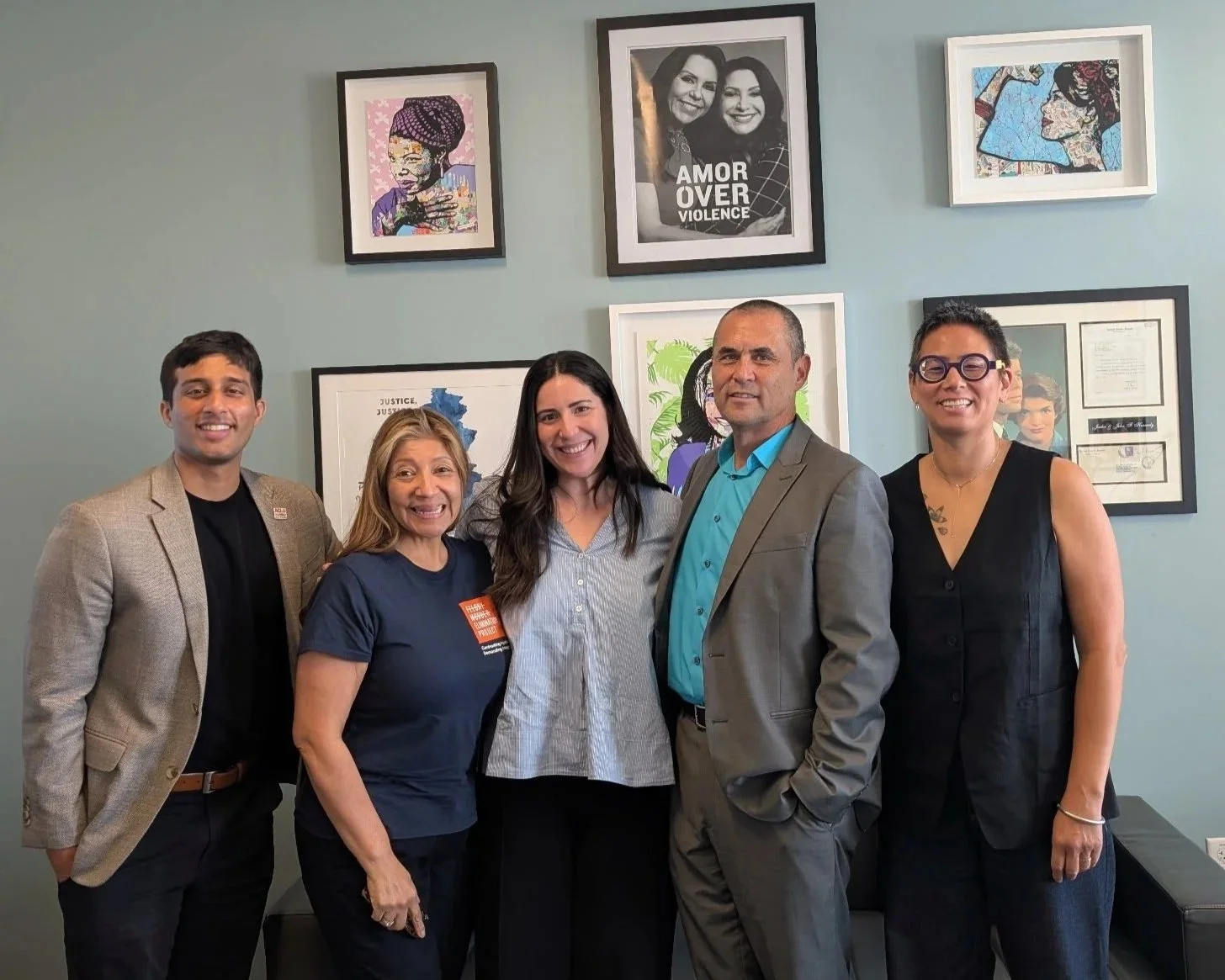
Photo credit @Courage California
We’re in a defining moment—a moment where we can choose to be overwhelmed, disconnected and discouraged, or where we can choose to be positive, embrace change and lift up the work of others seeking a better future together. At Mighty Arrow, we’re proud to support the work of the people and organizations out changing this world for the better—for all of us. Some may be small, some large. All are mighty. Each month, we highlight one of our Mighty Partners and we encourage you to get to know them, support them, and share their work with your friends, families and colleagues. Let’s get to work.