
From Crisis to Commons: Reimagining Food Systems Leadership with Ali Anderson of Feed Black Futures
Crisis has a way of clarifying power dynamics—at the dinner table, and beyond. Take the lockdowns of the early COVID pandemic in 2020: Supply chains failed, unemployment soared, support networks fractured in the face of social isolation, food insecurity skyrocketed and a national uprising against state-sanctioned racial violence ignited. This crisis exposed a deliberate architecture of inequality designed to keep certain tables empty.
Feeling the urgency of the situation, Ali Anderson took action, launching a mutual aid campaign. Aiming to crowdfund $10,000 to provide culturally relevant, nutritious food to 20 families impacted by incarceration in Los Angeles, the campaign sparked and spread, bringing in $90,000 instead. Seeding the genesis of Feed Black Futures to continue the work expanding from distributing food to building a movement for systemic change.
“So much of what we saw happening, which we didn't even really quantify until later, was the breaking of social isolation with sharing of food,” Anderson says. “We would ask people how many food boxes they needed, and it wasn't like we weren't figuring out where those food boxes ended up. But once we finally did some story collecting, we were like, ‘Oh, you were feeding your whole apartment building.’”
Anderson shared that those early days showed that food, and restoring historical connections to it and the land it's grown on, hit right at the heart of healing and building collective power.
“Food and land are power. So whether or not that's big P or little P, if you're engaging in food and land work, you are engaging in an essential life force for people, which is connected to their autonomy and self-determination,” says Anderson. “I thought of this as a project and now it's a movement, a political home to bring our next generation of food systems leaders into the fold.”
Formerly the Director of Capacity Building with the New York City Health Department’s Center for Health Equity, Anderson brings a deep background in organizing, public health, birthwork and food justice to her role as Founder and Co-Executive Director. We caught up with Anderson to learn more about the evolution of Feed Black Futures and what they have planned next.
Food, land and self-determination
“Food is an entry point for healing and for engagement,” Anderson says. “The land was the scene of the crime, but it was also the land that kept us safe with medicine and with healing. That connection, that healing to know that it is in my lineage to farm and reclaim that wisdom tipped the scales for me.”
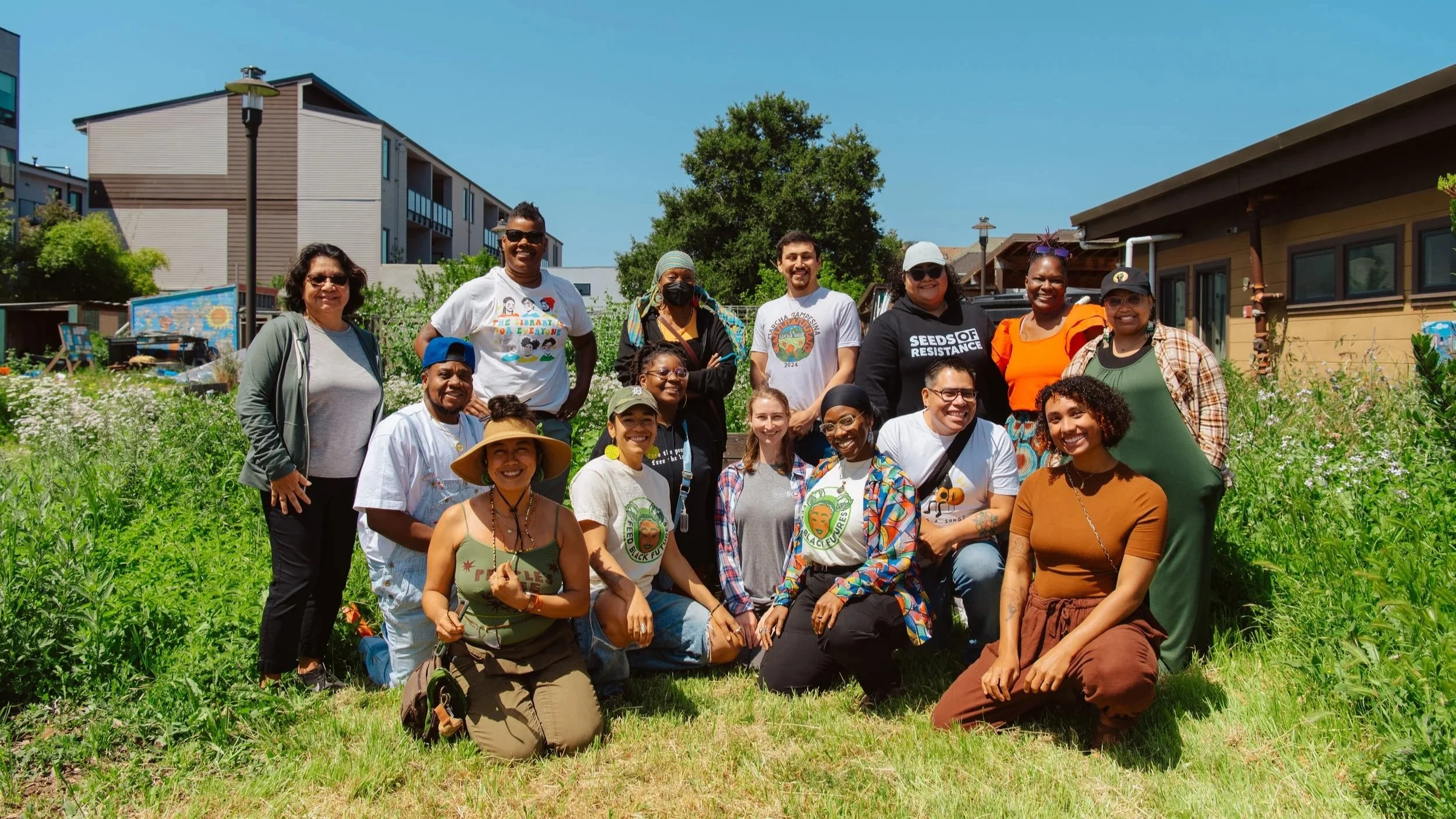
Photo Credit @Feed Black Futures
It may have started with feeding people, but the work extends far beyond the table, which is why in six short years, Feed Black Futures quickly expanded their vision—with the ultimate goal to transform the systems that determine who has access to land, food and self-determination. That means resourcing people and equipping them to grow their own food, reclaiming land stewardship and building collective power. And shifting their collective focus from the problem—food inequities—to the root cause—power inequities.
“The goal is ideally to shift structure so we don't have to rely on external forces, and create our own self-determined economies,” Anderson says. “But we need to shift power in order to shift systems. That can start with mutual aid, which is what we're doing, but it is really a strategy toward building collective power. And in order to embolden the food ecosystem and build food commons and land commons here, we need people to see themselves as part of the solution to that.”
This looks like everything from supporting farmers using regenerative agriculture, building gardens and putting people through farmer training, to supporting people in their business development and helping to build out farms and ecosystems for small and emerging land stewards.
Feed Black Futures has expanded from their Southern California roots to the Bay Area, Sacramento and Fresno, and just hired their seventh team member, an organizer, Kyndelle Johnson, who worked in the land trust movement for many years. Anderson says of the addition, “They’re helping us build a network of food and land stewards and do a fair amount of political education so we can figure out how to return land to our people and find ways to make sure farmers and land stewards are paid equitably.”
Keeping a holistic view
“When we think about a farmer or food worker, we don't often think of people that look like us,” Anderson says. “And we see that as a strength.”
Organizationally, Feeding Black Futures keeps intersectionality at its core.
“We represent the communities we're trying to serve, and those communities have gone without for so long. We are here representing them and we are here because of them,” Anderson says. “So we know we need to be intersectional in our approach and really represent our fullness.”

Photo Credit @Feed Black Futures
Anderson continues, “I thought about that Audre Lord quote, ‘there is no such thing as a single-issue struggle because we do not live single-issue lives.’ We're all Black, queer, we're all multi-hyphenate, not in the girl-boss way, but we contain multiple identities as does everyone regardless of race.”
For example, her Co-Executive Director, Sophi Wilmore, comes from an Agroecology and Environmental Science background but is also an artist, writer and circus performer. “And that is as much of their identity as it is being a former farmer,” Anderson says. “Same with our community engagement manager who is a Hijabi herbalist and first-generation individual.”
Anderson, personally, is a trained yoga teacher, doula, loves to dance and spend as much time outside as possible. Their approach with Feed Black Futures shines a light on, and honors the many unique challenges, gifts and identities of the communities they serve.
Sharing the work
“I love going into work,” Anderson says. “People always comment on how positive the energy feels when they walk in, which I love.”
Building an environment where people can show up authentically and receive support has created a culture visitors feel right away at Feed Black Futures. That deep support continues with their small and growing team. The organization has created policies for generous time off, wellness stipends and reimbursements and flexible work days.
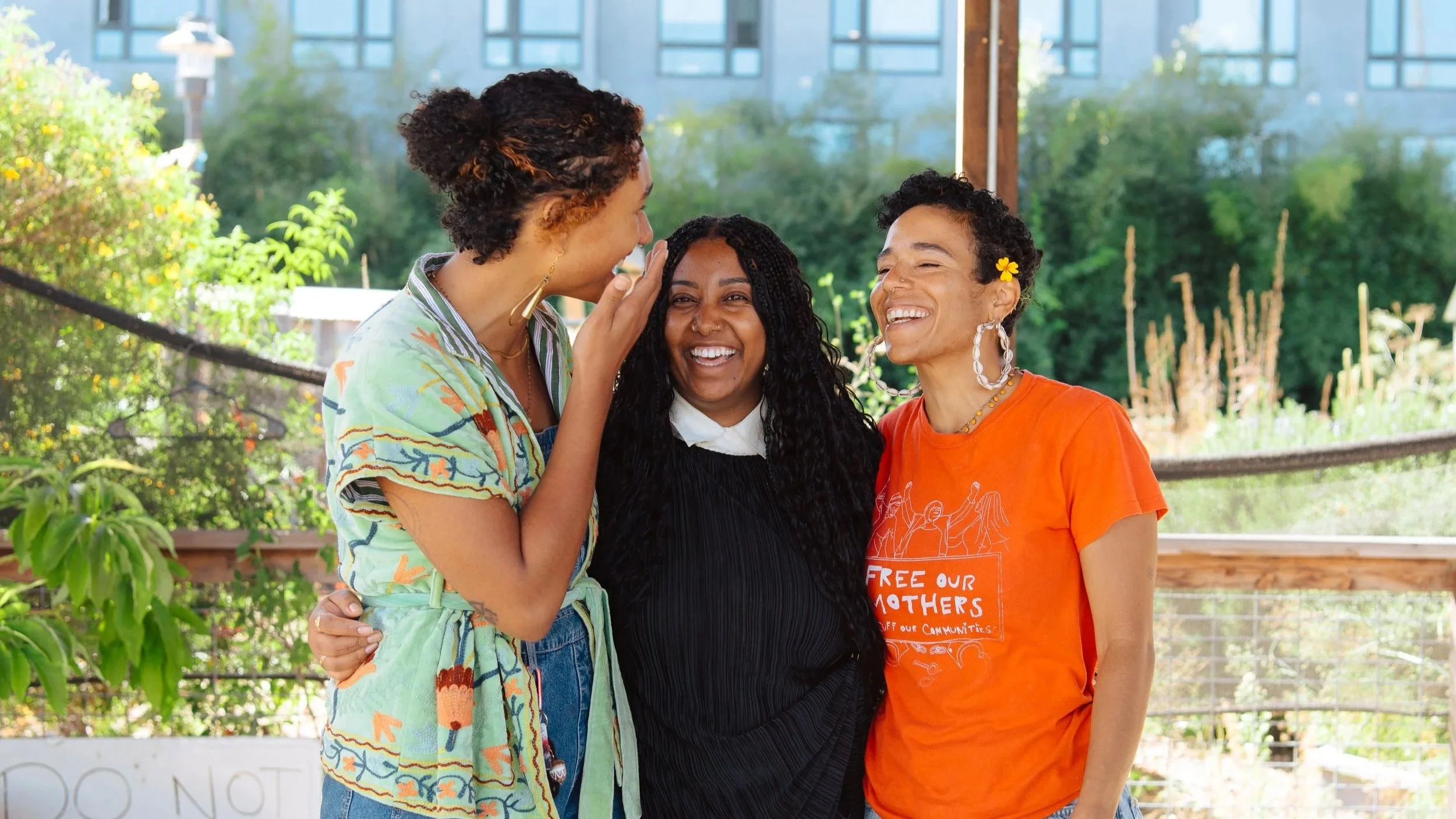
Photo Credit @Feed Black Futures
“Frankly, I would like them to be more robust to help care for our people,” Anderson says. They’re currently working on those policies, expanding to things like bereavement. “We want to make sure people enjoy working here because no one has to do this. We get to do this and we expect, of course, accountability, but we get to co-create what the container looks like.”
That attitude of creative thinking also led Anderson to bring on a Co-Executive Director. Three years into the organization’s life, the isolation of the sole ED role felt unsustainable. Anderson brought together a Board with the goal of spending down funds and determining strategic next steps for the organization. Wilmore had served as a Program Analyst for Feed Black Futures, and later joined the Feed Black Future’s Board that was gathering to advise on the spend down. By the end of the facilitated discussion, they landed instead on Wilmore stepping in to share the ED role. The change brought new energy, vision and direction to Feed Black Futures guiding the organization's next chapter.
It was a revelation: The role—the work—needed to be shared.
“This work isn't all that worthwhile if it's not done with someone else, I've realized,” Anderson says. “It's very, very helpful for someone to share what feels like the responsibility. The perspective they bring is that of artists and strategists, and they're incredibly organized and dynamic. It's been such a mutually beneficial relationship.”
That shared work transcends the Co-Director model Anderson and Wilmore have established, it continues to build and grow—always with an eye on the future.
“We're in a time when people feel without power. And that’s the fastest way to relinquish your power—to think you don’t have any,” Anderson says. “Building collective action and collective power is essential.”
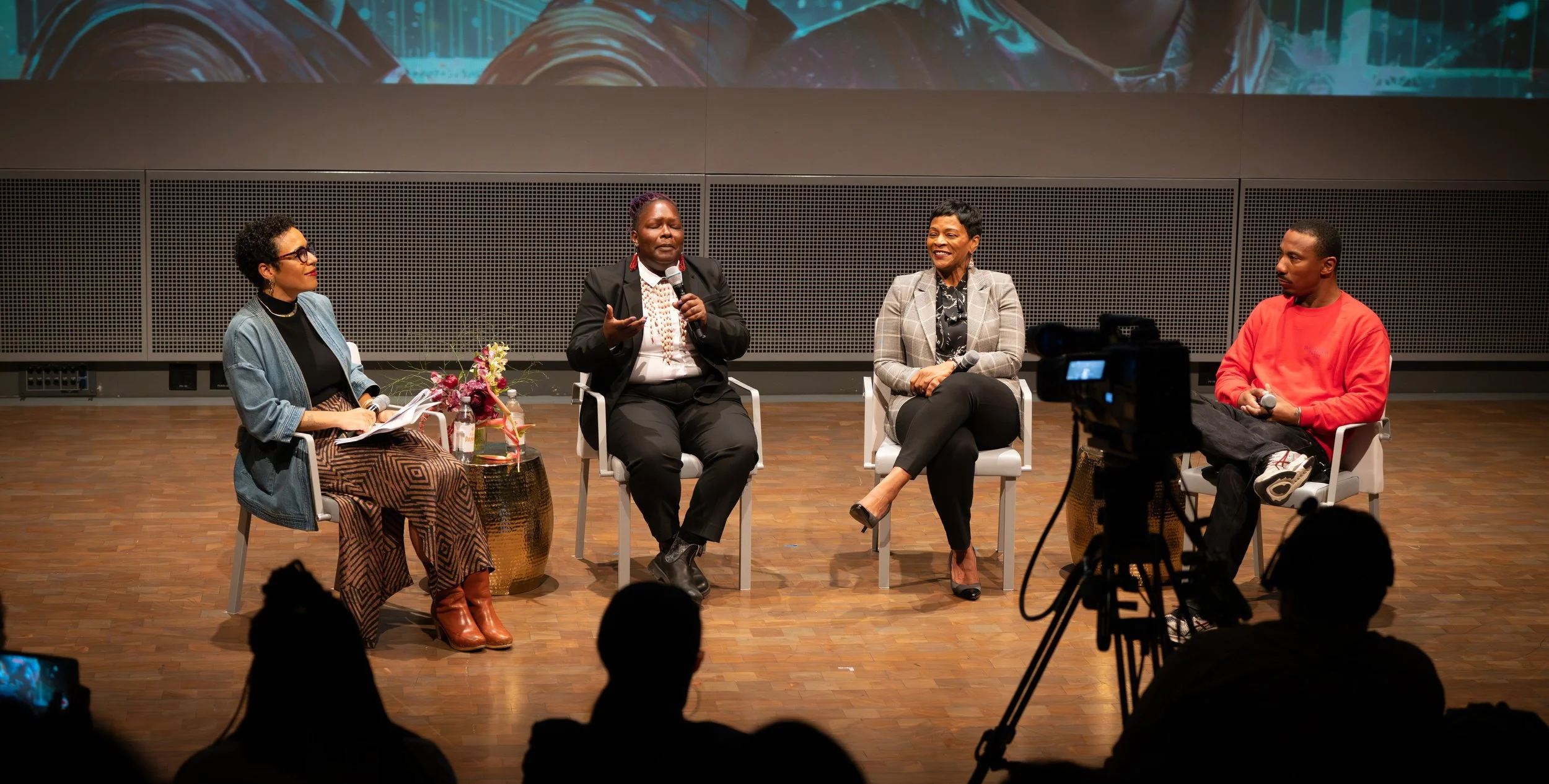
Photo Credit @Feed Black Futures
We’re in a defining moment—a moment where we can choose to be overwhelmed, disconnected and discouraged, or where we can choose to be positive, embrace change and lift up the work of others seeking a better future together. We’re proud to support the work of the people and organizations out changing this world for the better—for all of us. Some may be small, some large. All are mighty. Each month, we highlight one of our Mighty Partners and we encourage you to get to know them, support them, and share their work with your friends, families and colleagues. Let’s get to work.