
A New Way Forward: Fresh thinking about conservation with John Sanderson
John Sanderson isn’t afraid to pick up his phone to cold-call a complete stranger. A talent lost in the new technical age. But, crossing perceived socio-political divides is literally his job. And as director of the Center for Collaborative Conservation at Colorado State University (CCC), he says he’s privileged to witness positive outcomes that often fly beneath the radar. In light of headlines focused on our country’s increased political polarization, that’s pretty exciting news.
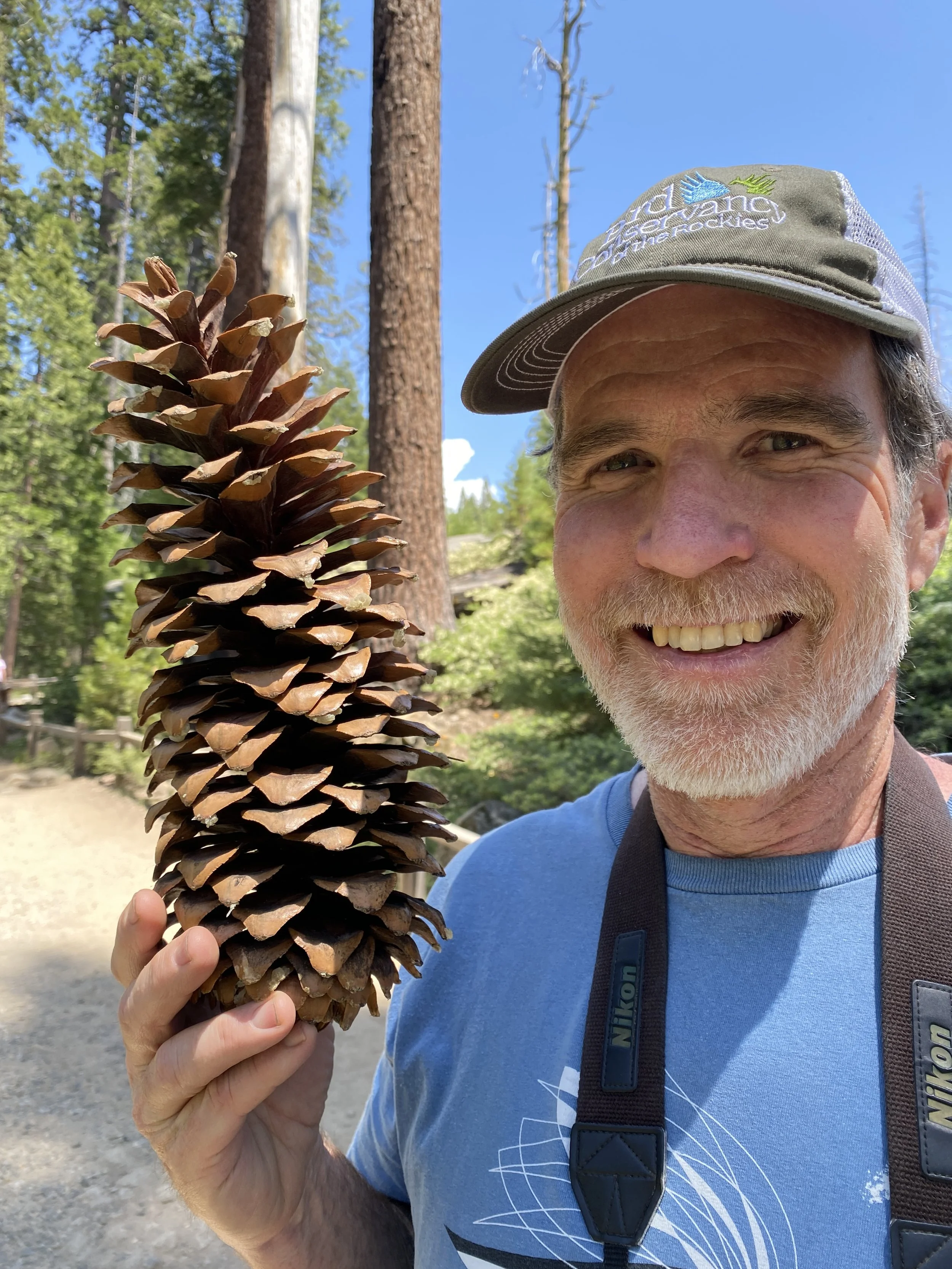
The CCC is part of CSU’s Warner College of Natural Resources, founded in 2008 to inform, promote, and support collaboration on tough conservation issues across Colorado, the American West, and more broadly influence the world. Many of the CCC’s positive outcomes start with simple, human acts like picking up a phone or sharing a cup of coffee—and then asking questions with genuine curiosity, Sanderson says. But sometimes those are the hardest steps to take.
The stories we believe about ourselves and others are deeply ingrained, and crossing bridges requires building trust. In Sanderson’s long career—including 14 years with The Nature Conservancy and a stint with the Peace Corps in Mali—he’s become very familiar with the frictions inherent in this kind of work. He’s also observed the fallacies and shortcomings of traditional conservation. We chatted with Sanderson to learn more about the CCC’s work and his vision for a new kind of conservation.
The first call is the hardest
Part of our country’s increasing polarization stems from assumptions we make about other people. For example, Sanderson points out that many liberal progressives have an impression that ranchers are only interested in exploiting the land, but he knows the truth is quite different.
“I know so many ranchers who care deeply about the land,” Sanderson says. “And this comes through in Colorado College's Annual Conservation in the West Poll. More than 70% of Coloradans call themselves a conservationist, and they care deeply about the land, and they're making a living from the land.”
Since his goal at the CCC is to turn conflicts into partnerships, the first thing Sanderson does when they take on a new project is pick up the phone and simply start asking questions, leaning into curiosity instead of judgment or defensiveness.
“I just call them up and say, ‘Let's have a conversation. Let's go out to lunch. Let's go have a cup of coffee. Let's connect as human beings. And I just want to understand where you're coming from and what your hopes and aspirations and goals are,’” he says. And he’s regularly pleasantly surprised.
For example, with an issue in North Park, Colo., Sanderson is working as a private land liaison, and was recently feeling a bit nervous about one particular call. But the landowner answered right away and quickly the tone was friendly. Sanderson says, “Within 10 minutes, we're talking about beaver, how much he just loves beaver, and he thinks it's so important that we restore beavers in our streams.”
And that right there—with beavers—was his common ground for a larger conversation and relationship with the landowner.
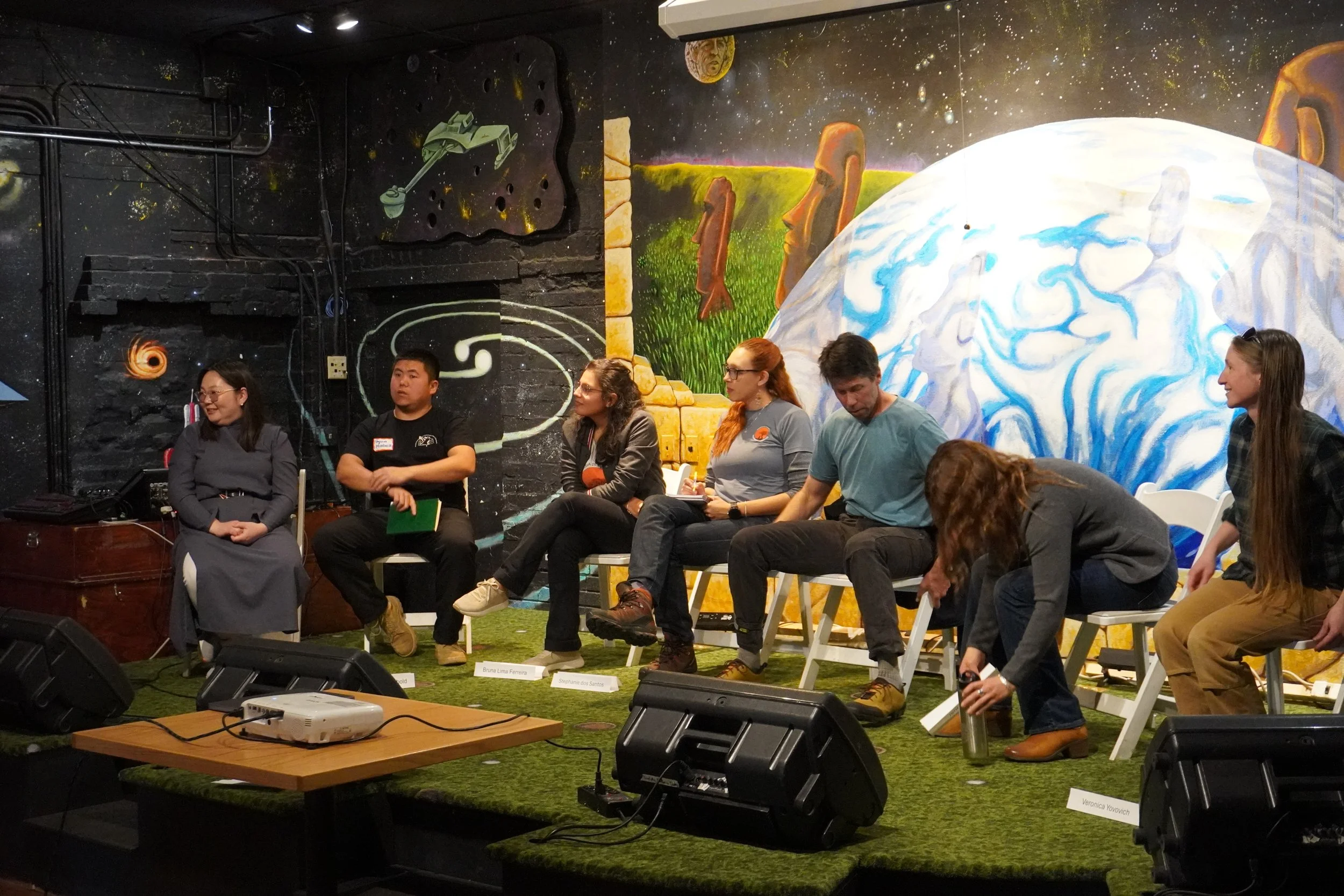
Photo Credit @CCC: Fellows from Brazil, Mongolia, and Colorado exploring living with carnivores on a panel conversation
The hard truth: This requires vulnerability
“Working with people you don't agree with is hard,” Sanderson says. “It sounds simple, but it can be kind of scary. It requires a certain kind of vulnerability and curiosity. It's so easy to get triggered, and to sit in that space where you suspend judgment and get curious is hard. It's so easy to just make quick judgments, but that’s not going to get us where we need to go.”
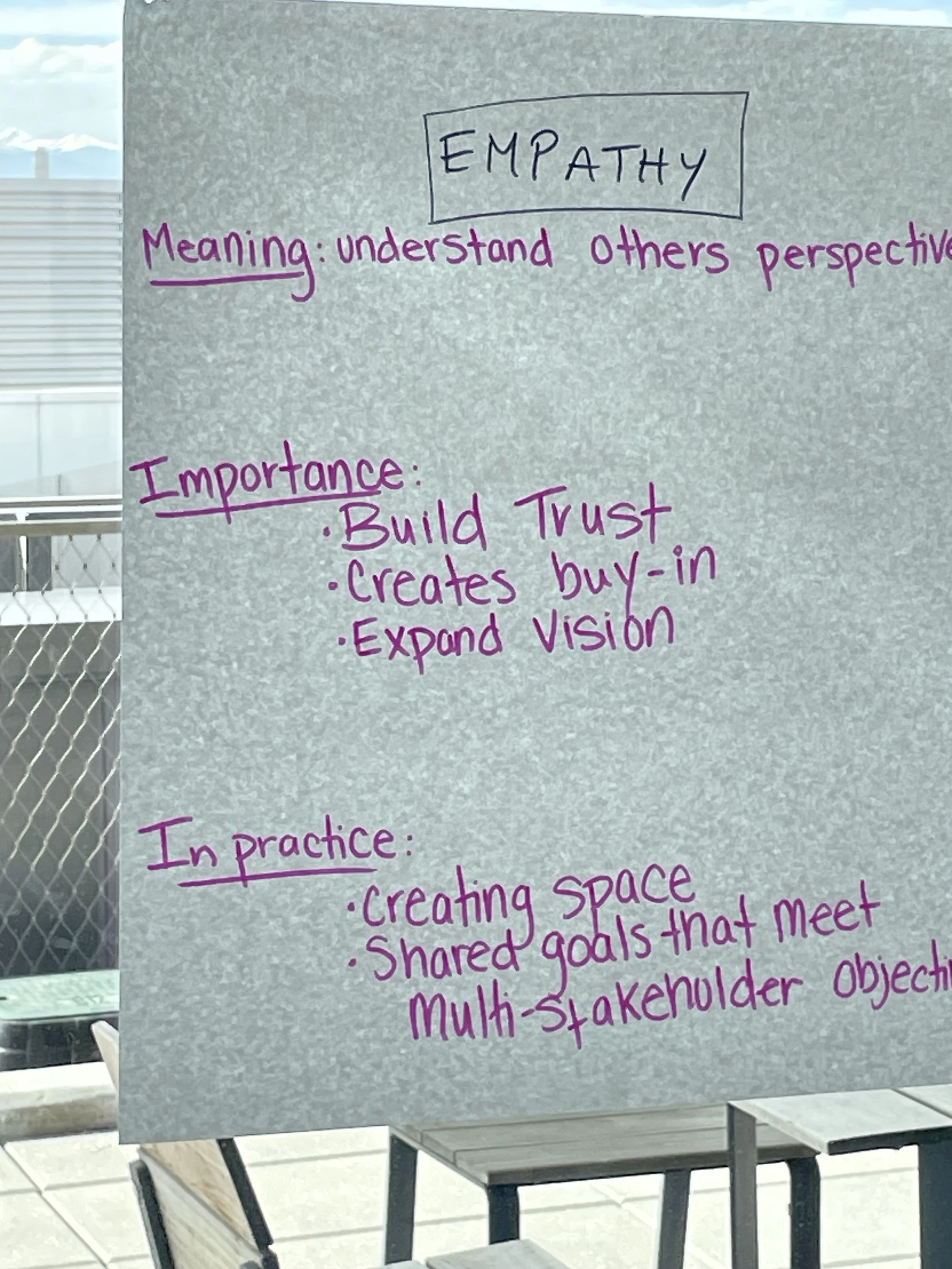
Photo Credit @CCC: Training on the meaning, importance, and practice of empathy for building trust and relationship.
What keeps Sanderson going through the hard parts is that he’s convinced almost everyone fundamentally wants to be good. He says, “There are bad actors for sure, but most of us want to do the right thing.”
Sanderson says that we all come from different places with different life experiences and values, and we’re often not even conscious of how those value systems play out. Building solutions requires building relationships, which requires connecting as a human being.
A new model: Broad ownership and collaboration
The model of conservation Sanderson was raised in is not getting the job done, he says, pointing to climate change and biodiversity loss. He continued, while there have certainly been victories and some success, part of doing better will be shifting to a collaborative perspective.
“When you can gather diverse perspectives together and tap into that diverse experience and knowledge and values, you will come up with better solutions, and those solutions will be more enduring because people across different backgrounds and different perspectives can see themselves in the solutions,” Sanderson says.
A compelling example he points to is Colorado’s recently established Ponderosa Mountain Pine Beetle Task Force. The people on the task force represent a wide range of perspectives–from US Forest Service staff to local communities. Many have worked together on forest health and wildfire for the long term, so a lot of trust and community already exists among them. With quick action required, those trust-based relationships will be vital to the collaboration needed.
“Those agencies and community-based groups are already networked,” Sanderson says. “We already know who to turn to, to learn what's working across the state and where the challenges are.”
That long-term community building and purposeful inclusion means differing stakeholders saw themselves in proposed solutions, he says. It’s that ownership that drives success and durability.
“It’s when we can all see that we’re working in a larger community that is, sure, looking out for their own interests, but also aware of and taking into account the other stakeholder interests—then that’s when we can do big things,” Sanderson says.
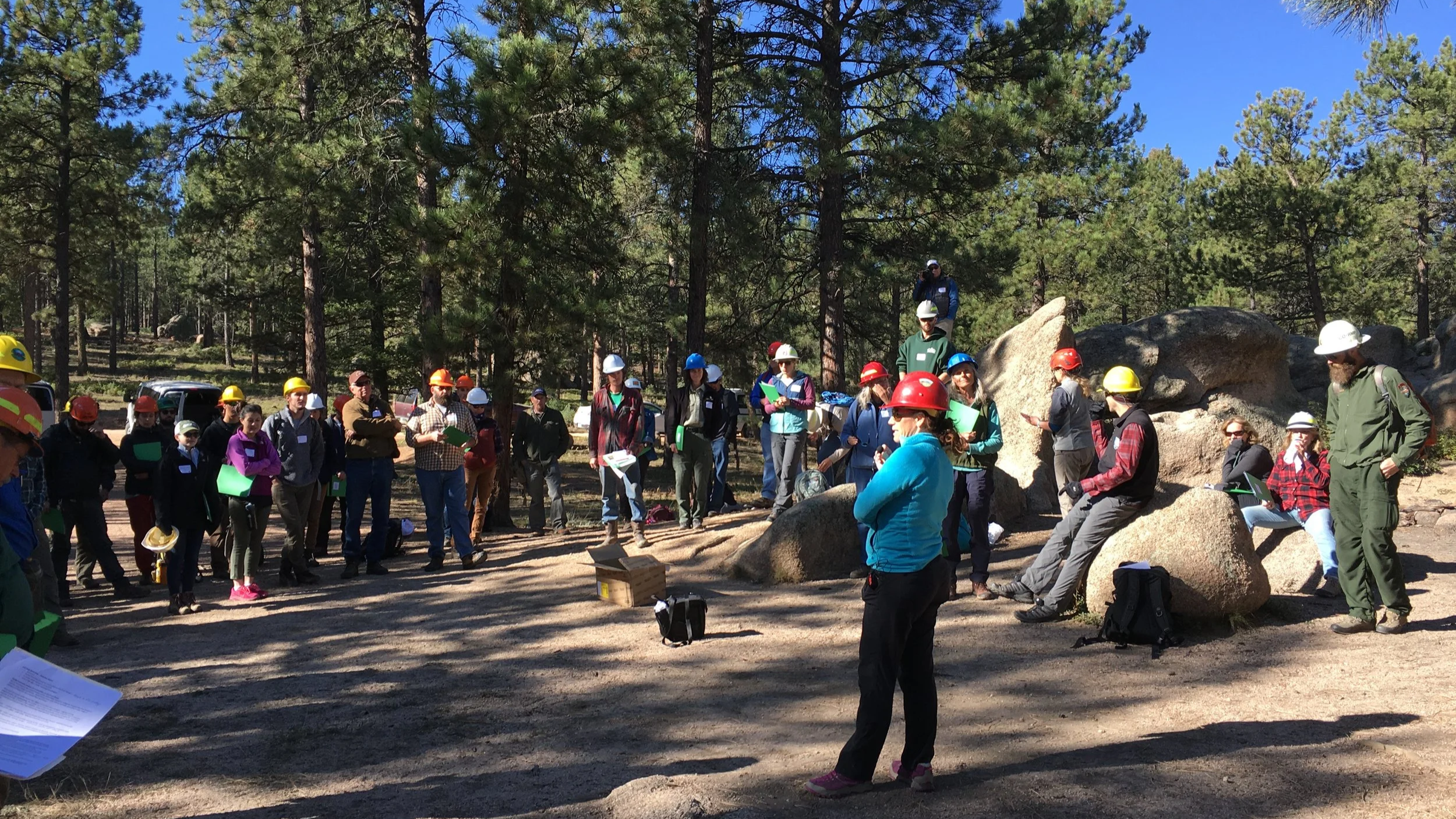
Photo credit @CSU CCC: Finding a path forward together on forest health and wildfire
Rethinking stakeholders when it comes to “nature”
One shortcoming of traditional western conservation Sanderson points to is the exclusion—or worse—of whole groups of people, including Tribes, Indigenous people, urban communities, people of color and more.
“We've created national parks by forcing the people who have lived there for thousands of years to leave,” he says, for example.
When we talk about stakeholders, it's really important that we think expansively about who needs to be part of the conversation—and who has been historically left out of it. The solutions may not be where we think they are, or where we’ve gotten used to looking for them.
“For example, we haven't figured out how to manage forests, but Indigenous people in North America were actively managing forests for thousands of years before we [mostly white, male conservationists] came along,” Sanderson says. “There's some great writing about how the world that the colonists encountered back in the late 16th and early 17th centuries was already a very actively managed landscape—and we need to learn from that.”
It’s for exactly those reasons, we have to approach our challenges with vulnerability, curiosity—and humility. Sanderson says that these historic exclusions have gone hand-in-hand with the fallacy that we, as humans, are separate from nature.
“When we talk about integrating economy, integrating ranching, integrating industry and so forth, we get pushback about exploiting natural resources,” Sanderson says. “We're trying to protect nature, and the narrative of nature “out there” suggests we just need to leave it alone. That is just, I believe, demonstrably false.”
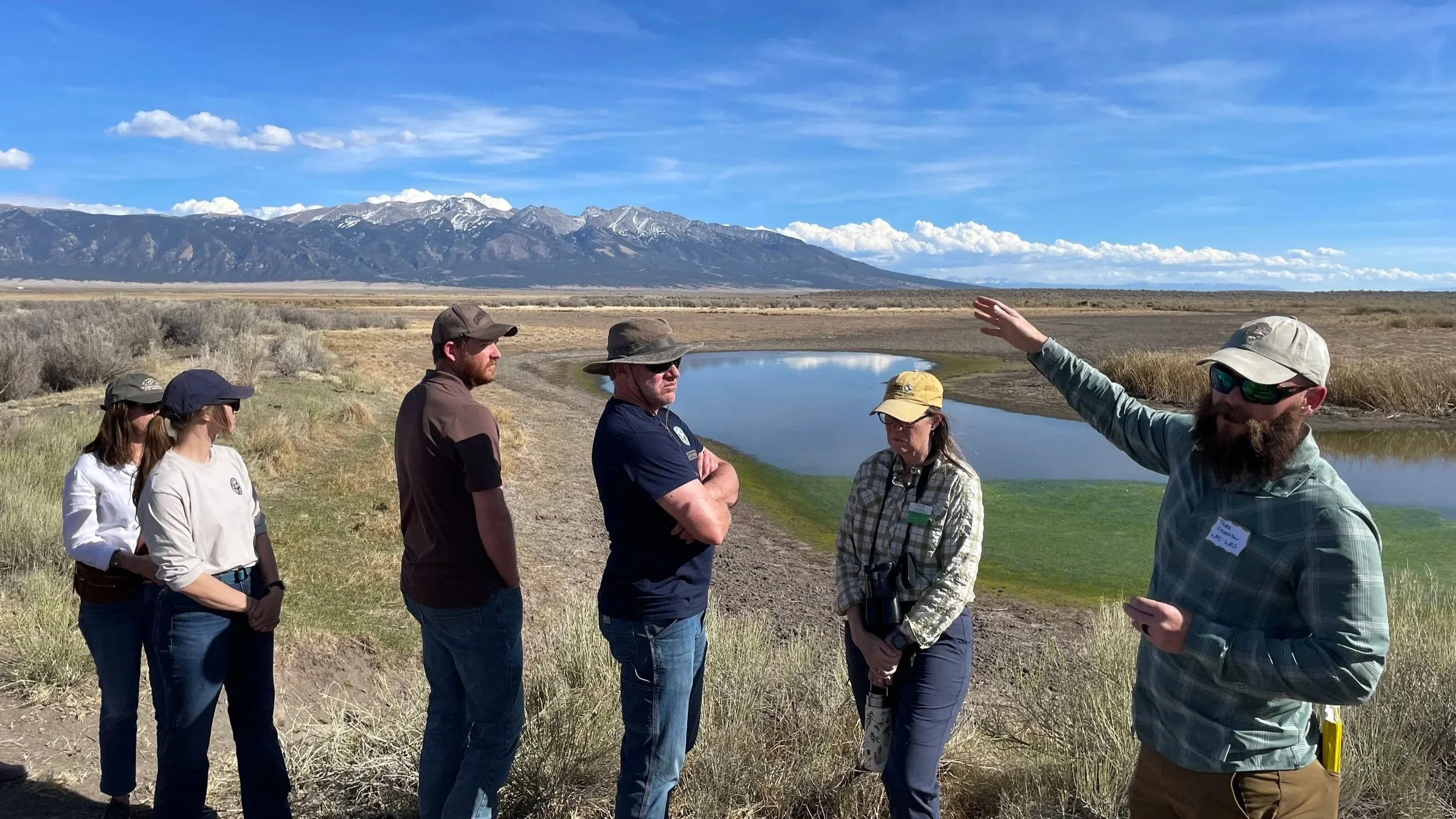
Photo credit @CSU CCC: Creating a shared vision for wetland restoration on the Great Sand Dunes National Park
Why we do hard things
Whether it’s sitting down at an event next to someone who may think differently from us or building trust and long-term relationships across a wide array of perspectives, what makes conservation successful is actually hard personal work, as Sanderson can attest.
“It takes courage. It requires vulnerability and requires growing our self-awareness,” he says.
Sanderson shares that real growth comes through difficulty, sometimes personal difficulty, and he’s quick to say that the word “hope” can be fraught. But, he says, “I know from my own experience that most people care.”
He continues, “I know so many people who right now are doing the hard work to create a good future for their communities and for the world. I see it all the time in my work. It's a real privilege for me because I can read today's headlines and feel distraught. And then I come to work, and I get to talk with somebody who's putting in the effort with sincerely good intentions to make the world a better place. And so that gives me joy and hope at the same time.”
We’re in a defining moment—a moment where we can choose to be overwhelmed, disconnected and discouraged, or where we can choose to be positive, embrace change and lift up the work of others seeking a better future together. We’re proud to support the work of the people and organizations out changing this world for the better—for all of us. Some may be small, some large. All are mighty. Each month, we highlight one of our Mighty Partners and we encourage you to get to know them, support them, and share their work with your friends, families and colleagues. Let’s get to work.